A builder's guide to boutique electric guitars
A builder's plain guide to boutique electric guitars: what the word guarantees, where the extra money goes, the kinds of maker, and how to choose one.
Nobody polices the word boutique, so it gets used for everything from one bloke in a shed to a small factory with a good photographer. I'm the bloke in the shed. I'm John, and under the name Blind John's Guitars I build relic electric guitars one at a time at the bottom of a garden in Hopton, Suffolk. What follows is what I'd tell any player weighing a boutique guitar against a factory one: what the word promises, where the extra money goes, what kinds of builder are out there, and how to choose one without getting stung.
What boutique guarantees. Not a lot, on its own.
All the word reliably tells you is that the guitar came from a small outfit in small numbers. It says nothing about who dressed the frets or whether anybody played the thing before it went in the box. Price doesn't settle it either, because a dear guitar can still turn up with fret ends sharp enough to cut you.
So judge the guitar and the person who made it, and treat the label as decoration. Who builds it, start to finish, and can you talk to them? Is the finish nitro or poly? What's done to the neck and the fret ends as standard? Can you hear it or play it before you pay? A builder who answers those without wriggling is probably worth your time.
Where the extra money goes. All four come down to somebody's hours and skill.
It goes on timber, finish, feel and electrics, and all four come down to somebody's hours and skill.
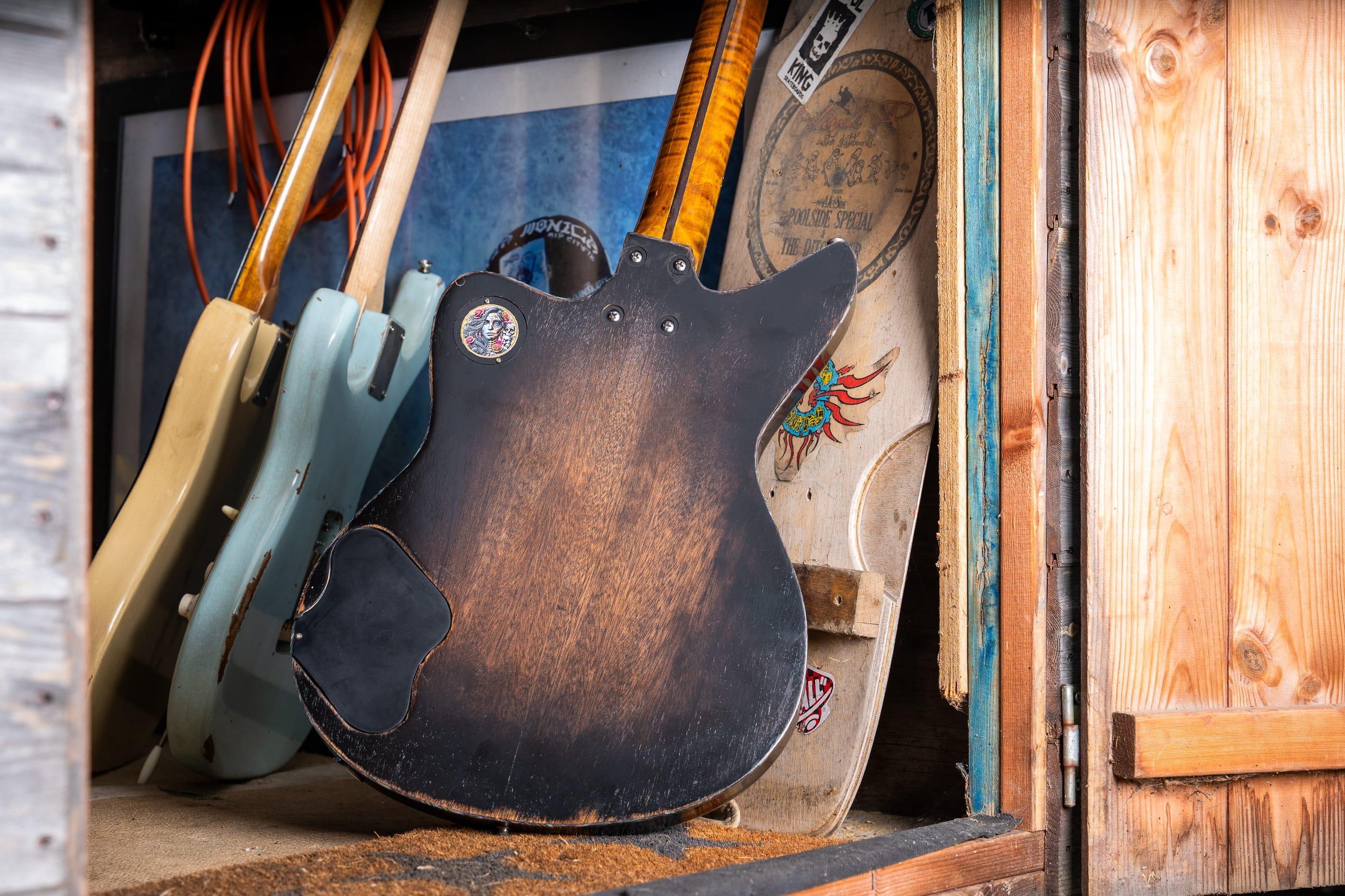
Timber first. A small builder chooses each board on its own merits and can use pieces a production run never would. The Lost Model, one of my one-offs, has korina sides, a flamed maple top and a back of spalted sycamore that grew here in Suffolk. Choice costs money, and it works the other way too. On my Gateway Drug Line the timber is fixed, which is why those three are the least expensive guitars I make to order. There's more on the woods I build with if you want it.
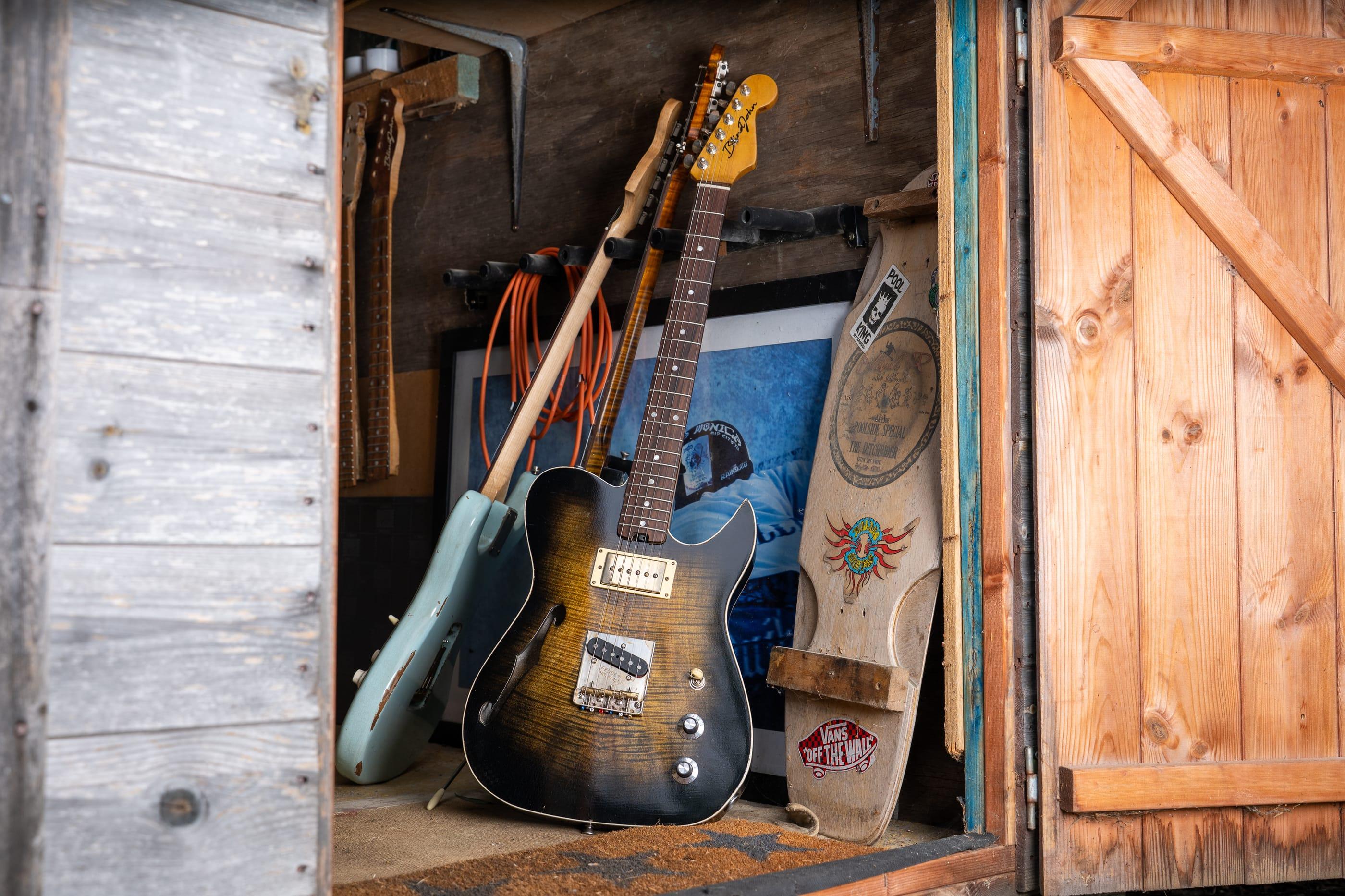
The finish. Most factory guitars wear poly, which is tough and quick to apply. I finish in nitro, which goes on thin and wears where your arm and hand land, so it ages the way the old ones did, and that's what I relic. The relic work is slow handwork, and it carries on under the pickguard where nobody looks. I've said my piece on why I finish a guitar in nitro if you want the long version.
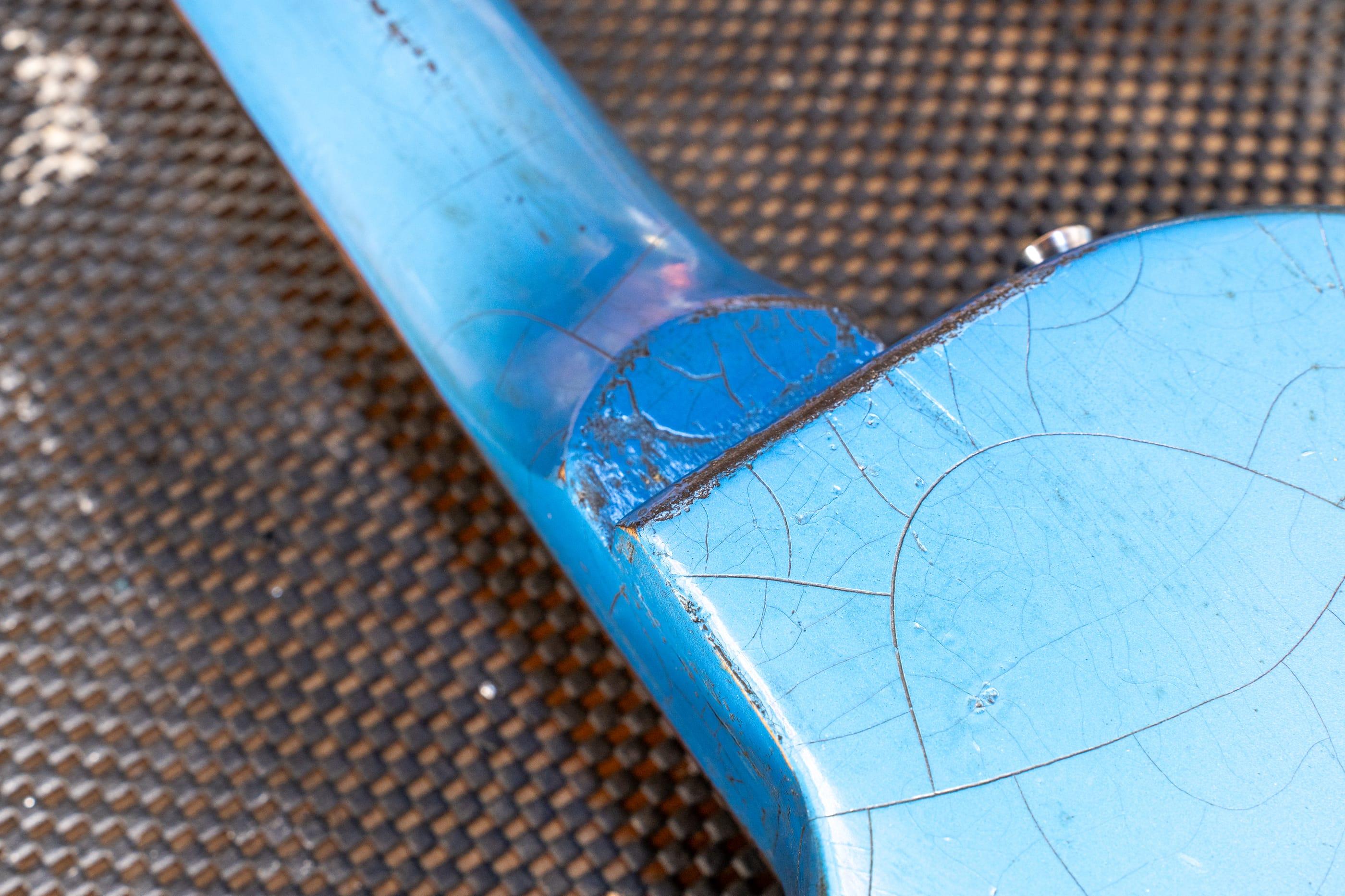
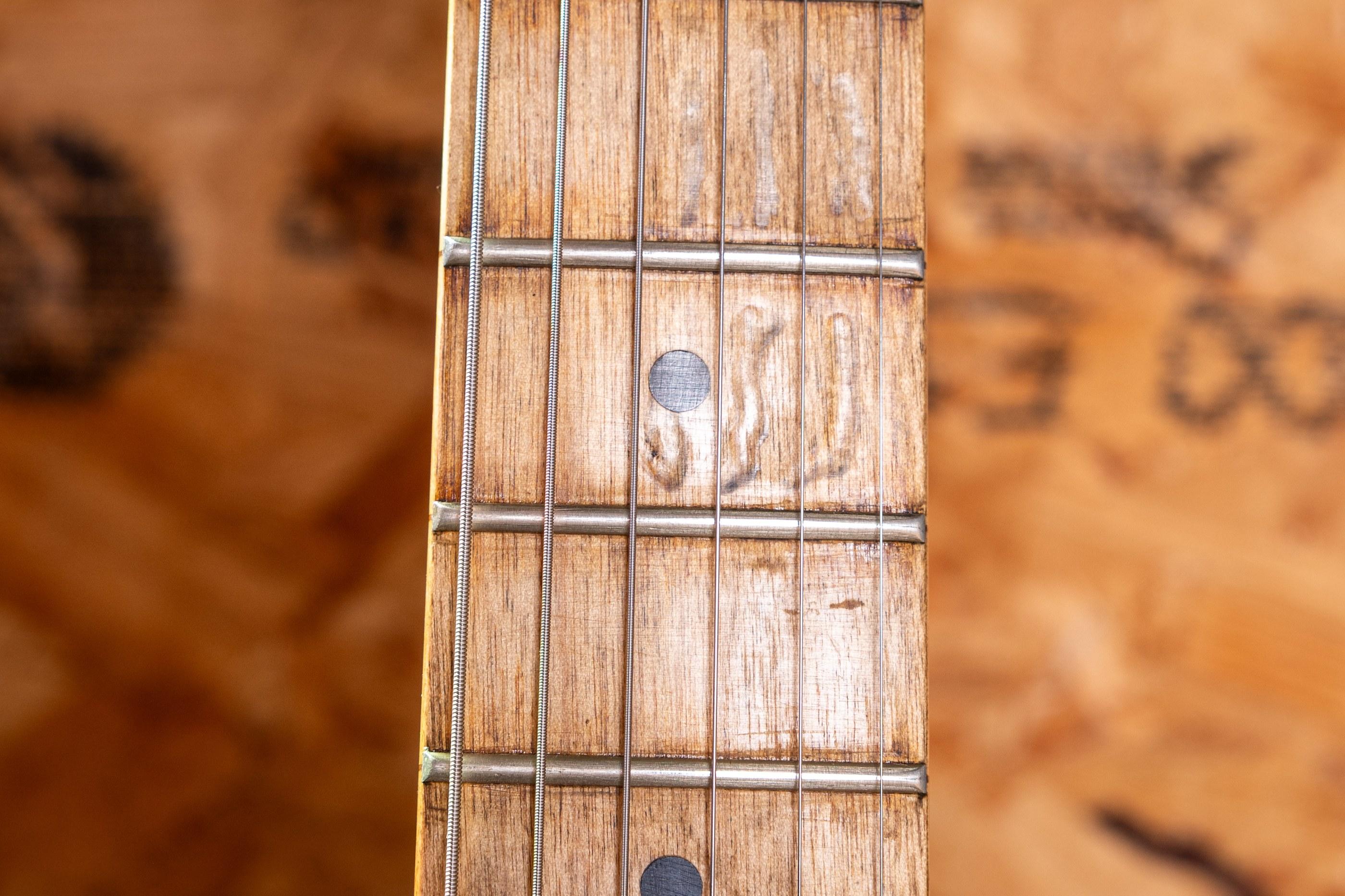
The feel. Every guitar leaves here with the fretboard edges rolled and the back of the neck taken to bare wood and waxed, because a glossy neck sticks to a warm hand. They're small jobs that eat time, and time is what a production line is built to save.
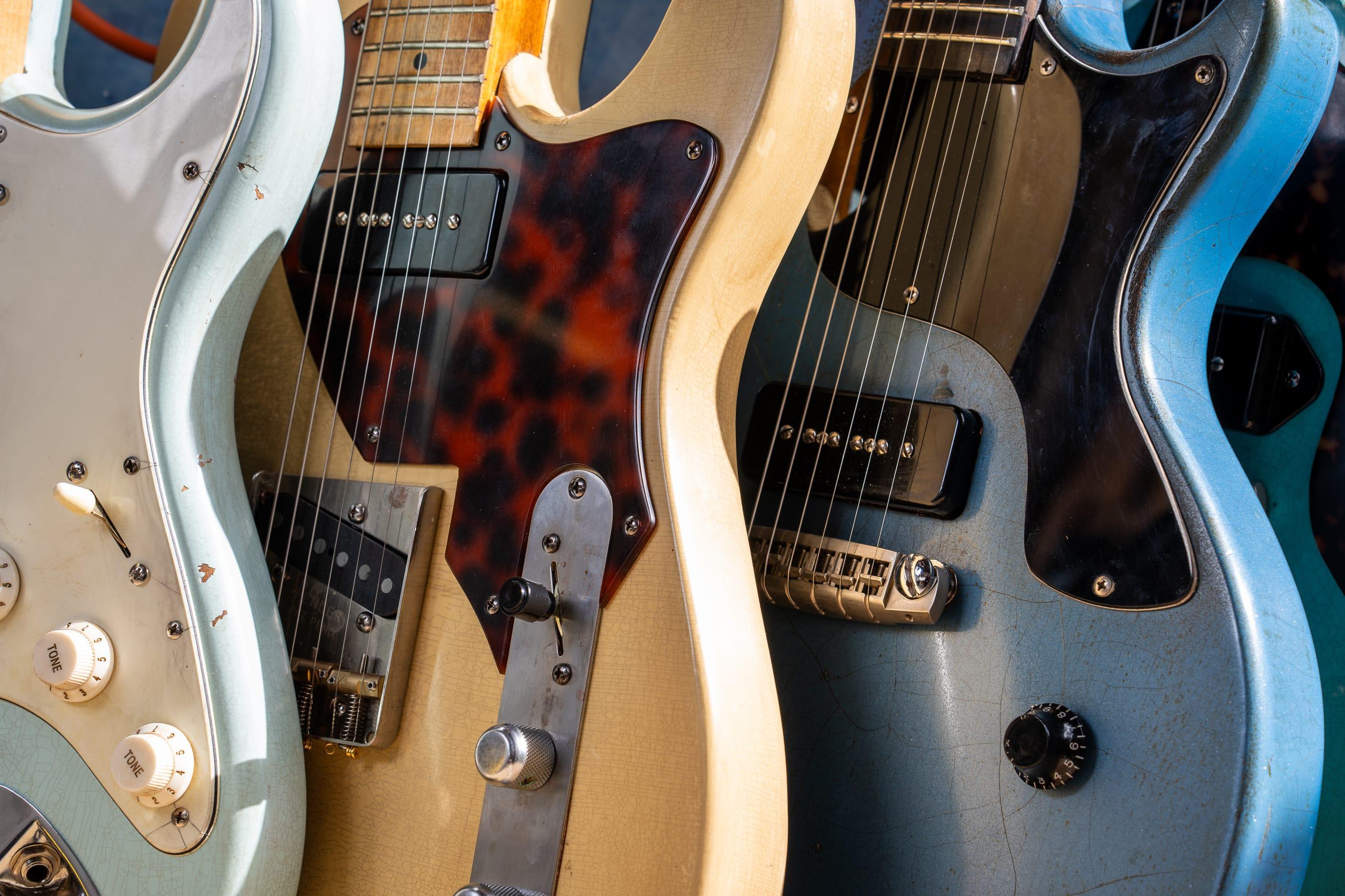
The electrics. Hand-wound pickups from people who have an art I don't, decent pots and wiring done properly. You can test this on any guitar in any shop with one knob. Get a crunchy sound with the volume on ten, roll it back to about six, and it should clean up. Most guitars don't, and the volume control test usually finds the wiring and the pot at fault long before the pickup.
Boutique electric guitar builders. They come in three sizes. Roughly, anyway.
The factory is in here as the baseline, since that's what you're weighing a boutique guitar against.
| Solo workshop | One person at every stage, who answers the email too, for a one-off, talked through with the person making it |
|---|---|
| Small shop | A handful of people sharing the stages, for a known model with some choices of your own |
| Custom-shop-style maker | A team inside or alongside a bigger company, for a famous shape with the famous name on it |
| Factory | A production line, for one today, tried side by side with others in a shop |
I'm not going to rank the best boutique electric guitar brands for you. I haven't had most of them across my bench, and a ranking from someone who hasn't is worth nothing.
What puts people off. You can't try it first, the wait, and trusting a stranger.
You can't try it first. Most boutique guitars are sold at a distance, so look for two things: recordings made the same way every time, and a door you can knock on. Every guitar of mine is recorded through the same small amp at one watt by the same hands, so the differences you hear are the guitars. The shed is open to visitors by appointment, Tuesday to Saturday, in the middle of the triangle made by Bury St Edmunds, Thetford and Diss.
The wait. A commission takes as long as the work takes. Mine takes 12 to 16 weeks at the bench from the day the deposit lands, and if a build looks like overrunning I say so and give a new date. If you'd rather not wait, buy a finished guitar. My Tone Control guitars are one-of-ones, already built and set up, and they ship within the week.
Trusting someone you've never met. With a commission you pay a deposit before any wood is cut. Mine is half the full cost, up front, and it commits us both. Look for the guitars out in the world, in the hands of people who gig them.
The best one. Best means best for how you play.
No one guitar is the best boutique electric guitar for everybody, because the right one depends on who's playing it. What matters is the weight on your shoulder, the neck in your hand, what the pickups do with your amp, and how loud the room is. That's why my commissions start with questions about how you play and not one about the spec. I read every answer, and the spec gets worked out between us from there.
The same goes for vintage boutique electric guitars, meaning new guitars built to the old patterns and aged to look their years. The originals are priced beyond most players, and they may not suit you anyway. A relic built around how you play can suit you better than an original ever would.
One worked example. Mine.
There are three models to start from, all made to order, with prices starting at £1,875 for the Gateway Drug Line, £2,375 for the Thickline and £3,225 for the DeVille. Where a build lands from there depends on what you ask for. Alongside them sit the Tone Control one-offs for anyone who wants a guitar now. If you've something else in mind, ask. I'll build most things.
Common questions. The short answers.
What makes an electric guitar boutique?
There's no official definition. In practice it means a guitar built in small numbers by a small maker, with far more handwork than a production line allows. The word itself guarantees nothing, so ask who builds it and what's done by hand.
Are boutique electric guitars worth the money?
They are if the money has gone on things you can feel and hear. That means chosen timber, a thin nitro finish, fretwork and neck work done by hand, and good pickups wired properly. A high price alone proves nothing, so check each of those before you pay.
Who are the best boutique electric guitar makers?
The best one is the builder whose guitars suit how you play and who answers your questions straight. I won't rank makers whose guitars I haven't had on my bench. Listen to recordings, play one if you can, and talk to the builder before you decide.
How long does a boutique electric guitar take to build?
It depends on the builder and how many guitars they make. Here a commission takes 12 to 16 weeks at the bench from the day the deposit arrives. A finished Tone Control guitar ships within the week.
Can I try a boutique guitar before I buy it?
Often you can, though it takes more effort than walking into a shop. I take visits at the shed by appointment, Tuesday to Saturday. Every guitar is also recorded through the same amp by the same hands, so you can compare them from home.
Are vintage boutique electric guitars actually old?
No. They're new guitars built to older designs and usually aged by hand to look and feel played-in. Mine are finished in nitro, so the wear carries on from where I started it as you play.
Start with how you play. Twelve questions, three minutes at most.
If you're weighing one up, start with the questions. There are twelve, they take three minutes at most, and nothing is paid or booked until you say so. I read every answer and write back within a day.
| Written | 27 November 2026 |
|---|---|
| Who | John |