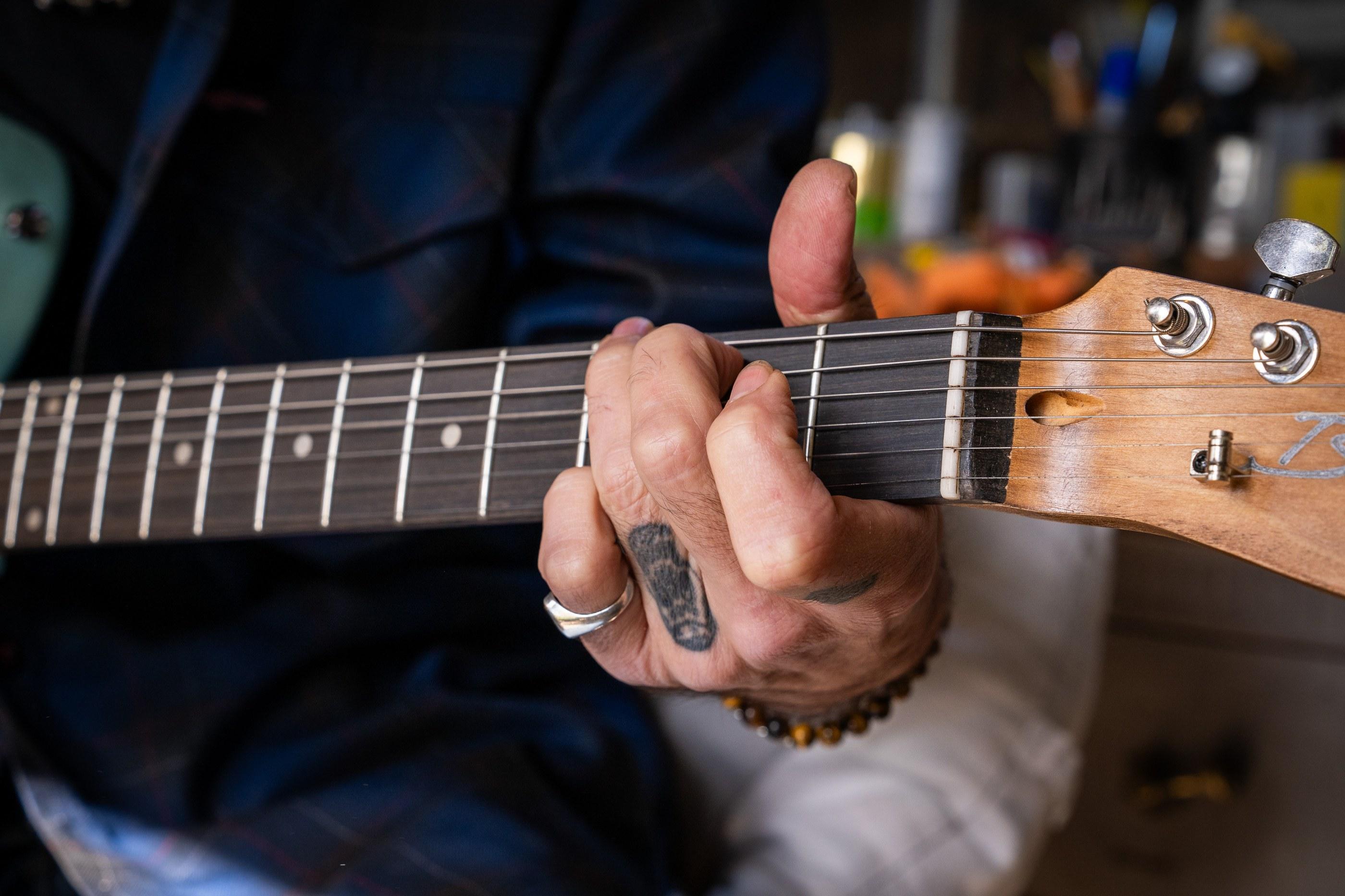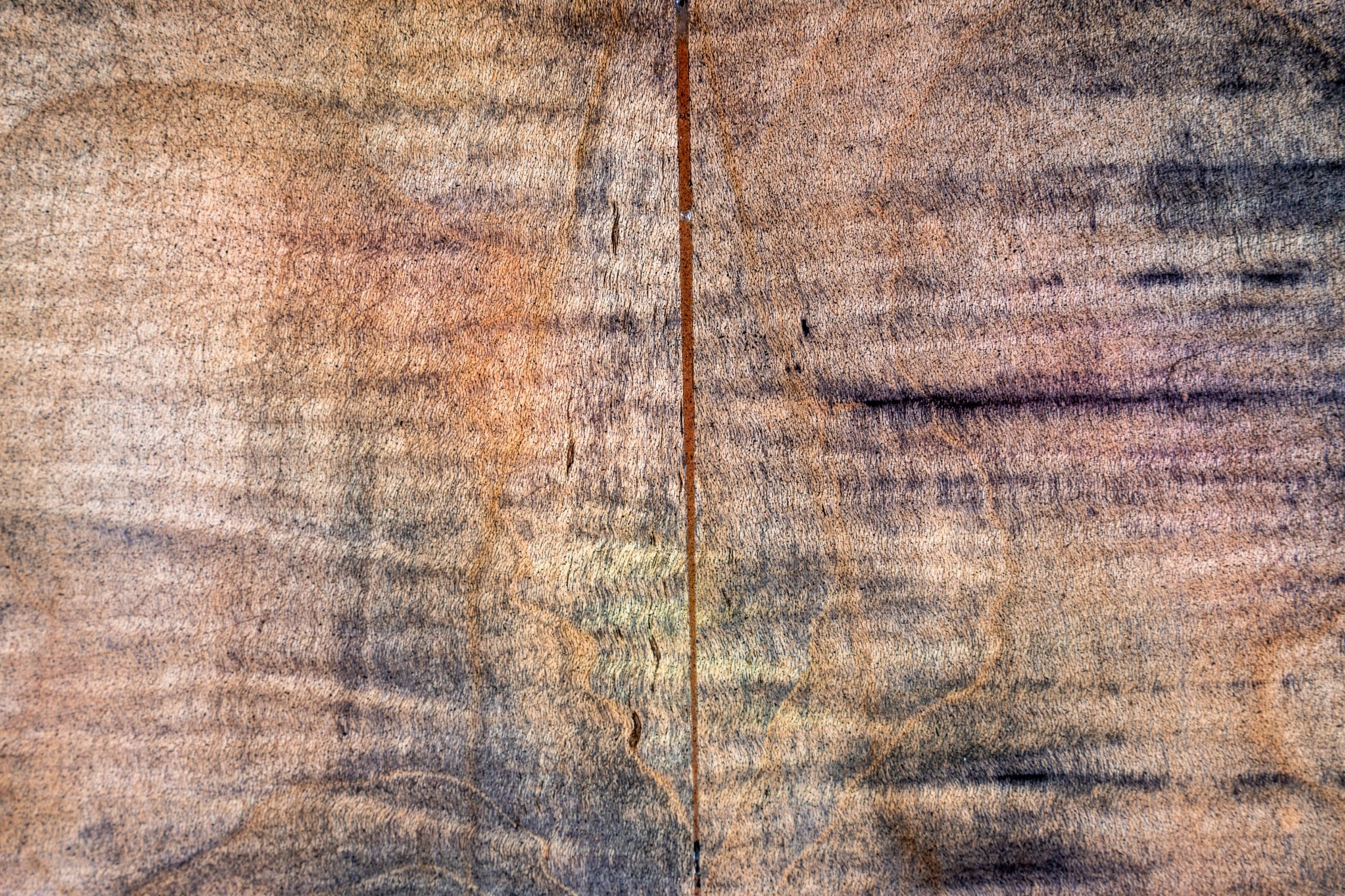
Fretboard wood types: maple, rosewood or ebony?
The three fretboard woods that get reached for and why, whether the wood changes the tone, why maple is lacquered, rolled edges and finger marks, the sticky neck, and roasted maple.
The three. I'm a real traditionalist there.
The three I always reach for are maple, ebony and rosewood. I'm a real traditionalist there. They've always been traditionally used, and for good reason. They're hard wearing, and they look nice.
Why reach for one and not the other? Aesthetics. Pure and simple. There is an argument that rosewood is a little bit darker than maple, maple a little bit brighter in tone, which it probably is. Could most people tell the difference? Doubtful. Does it make that much difference? Probably doubtful, being that an electric guitar is always going to be the sum of its parts. So yeah, I like the contrast of dark.
Lacquer. You're actually fretting on the frets, not on the timber.
A fretboard itself doesn't take that much damage, apart from your fingers pressing the frets. And you're actually fretting on the frets, not on the timber. Most fretboards, ebony and rosewood, aren't lacquered. In fact, going back a bit, that's probably what it is about maple that I don't like. I really don't like lacquered fretboards.
| Maple | Pale and hard, lacquered as a rule: it has no oil of its own, so bare it takes in sweat and dirt |
|---|---|
| Rosewood | Dark brown, open-pored and oily, left bare |
| Ebony | Black, dense and the hardest wearing of the three, left bare |
| Roasted maple | Maple heated until it turns caramel brown, drier, so it moves less with the seasons |
Rolled edges. If it's easier to play, you're going to play more.
If I'm doing a basic service on a brand new guitar, I will ask the person that wants the service if they want the fretboard edges rolled. All that is is taking those sharp angled edges off the edge of the fretboard, so it feels a bit nicer. It doesn't feel quite as sharp. That happens with age anyway, but it can take a very long time, and if you have a timber like, say, ebony, which is phenomenally hard-wearing, it's going to take even longer. It just feels nicer in the hand. And if it feels nicer in the hand, it's easier to play. If it's easier to play, you're going to play more. It's as simple as that. But it is a form of relicing.
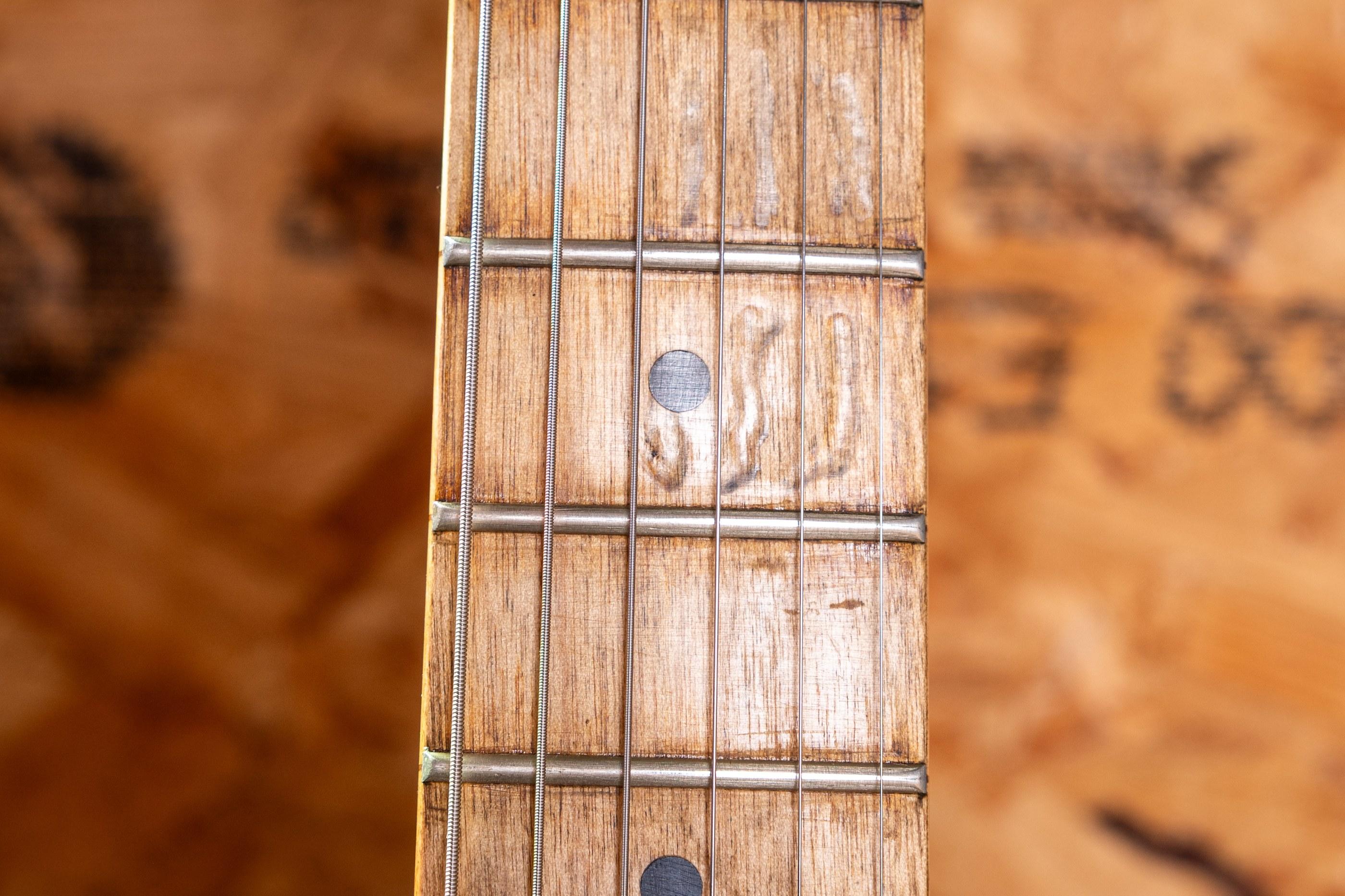
You wouldn't necessarily think of it in those terms. You may think of the more heavy relicing, the finger marks and things. If you look at the 107, that's designed to look like it's had heavy, heavy use. So there are finger marks where people have fretted over fifty, sixty years. That's gone into the timber, and that naturally accumulates oil, so you can see those marks quite clearly. Which would happen with sixty, seventy years of play, and it really gives you that lovely worn-in look. In that case, very worn in, which some people love and some folks hate.
The sticky neck. It's actually the back of the neck.
Why do some fretboards feel stickier or rougher than others? I don't think it's the fretboards that feel sticky and rough. It's actually the back of the neck, because that's what's in contact with your hand. If it feels like your hands are sticking, you have that kind of normal sweat that most normal folks have, where that sweat and a slick neck means that you stick. It's a bit like two bits of glass and some water. Put them together and they can stick really well. You won't move them that easily without breaking a piece of glass. It's the same principle. There's a thin layer that almost seals your hand to the back of the neck, because both surfaces are so smooth.
Lacquer is very slick, particularly on the back of the neck. I know people who get on fine with lacquered necks, play a lot, hands never stick. Most people suffer from sticky, sweaty palms on sticky necks, and that makes playing a bit of a nightmare.
You can get around it in a variety of ways. If your neck's got a poly finish or a nitro finish, just use Scotch-Brite pads or a high grade, 2000 grit, and sit and rub the neck for a while. That'll take the shine off it and make it far easier to play. I have done probably since I was nineteen, twenty: at the very least, some Scotch-Brite to buff the back of the neck, where your hand goes up and down, to a matte finish, simply because it doesn't stick as much.
On the necks of my guitars, from just below the headstock to just above the heel, that area has little to no lacquer. It will be oiled, polished, buffed, so it feels nice and smooth and feels nice and slick. But it won't be lacquered and it won't be sticky, however sweaty you get.
Roasted maple. Your workshop smells like the best maple syrup you can imagine.
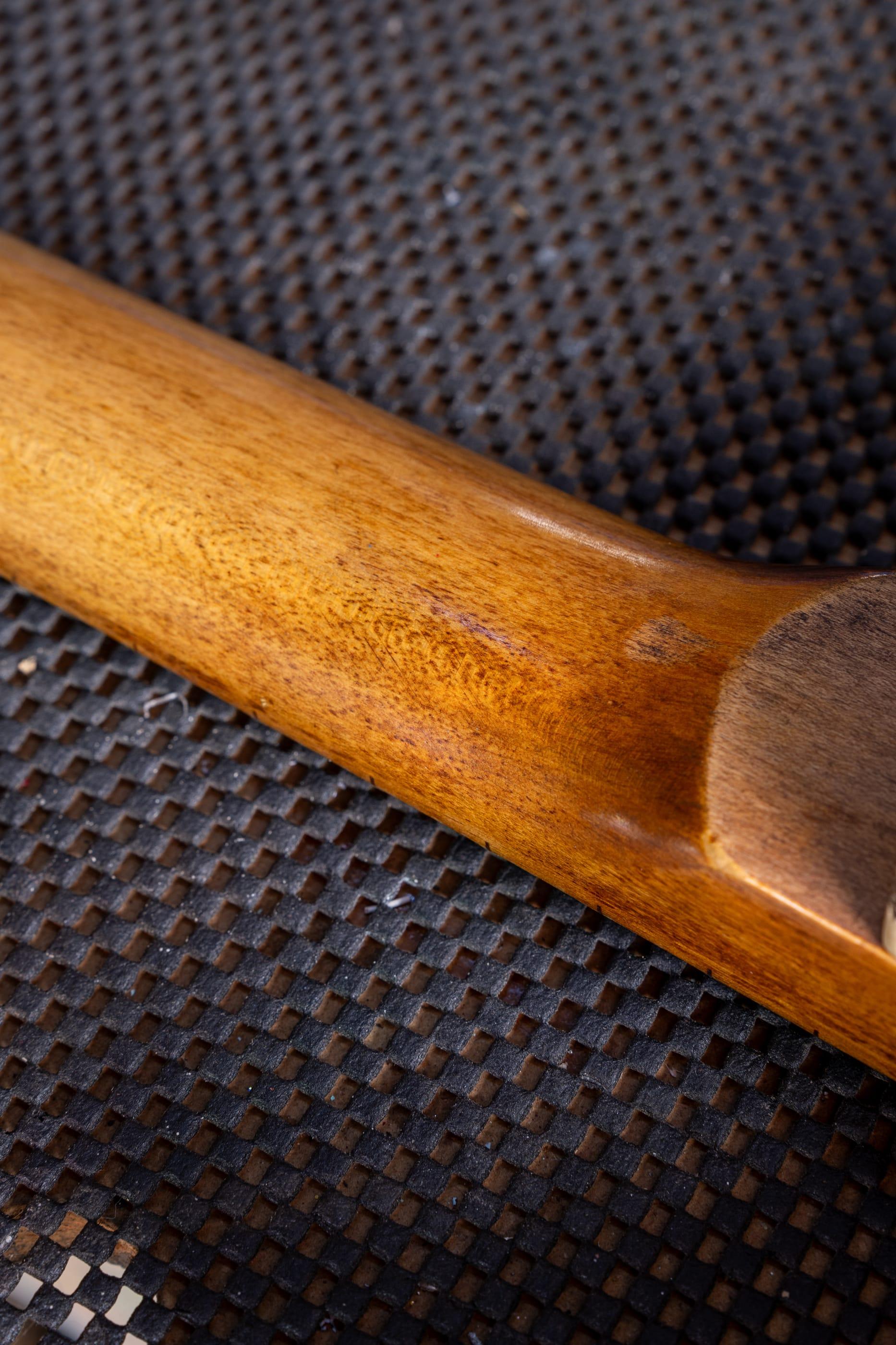
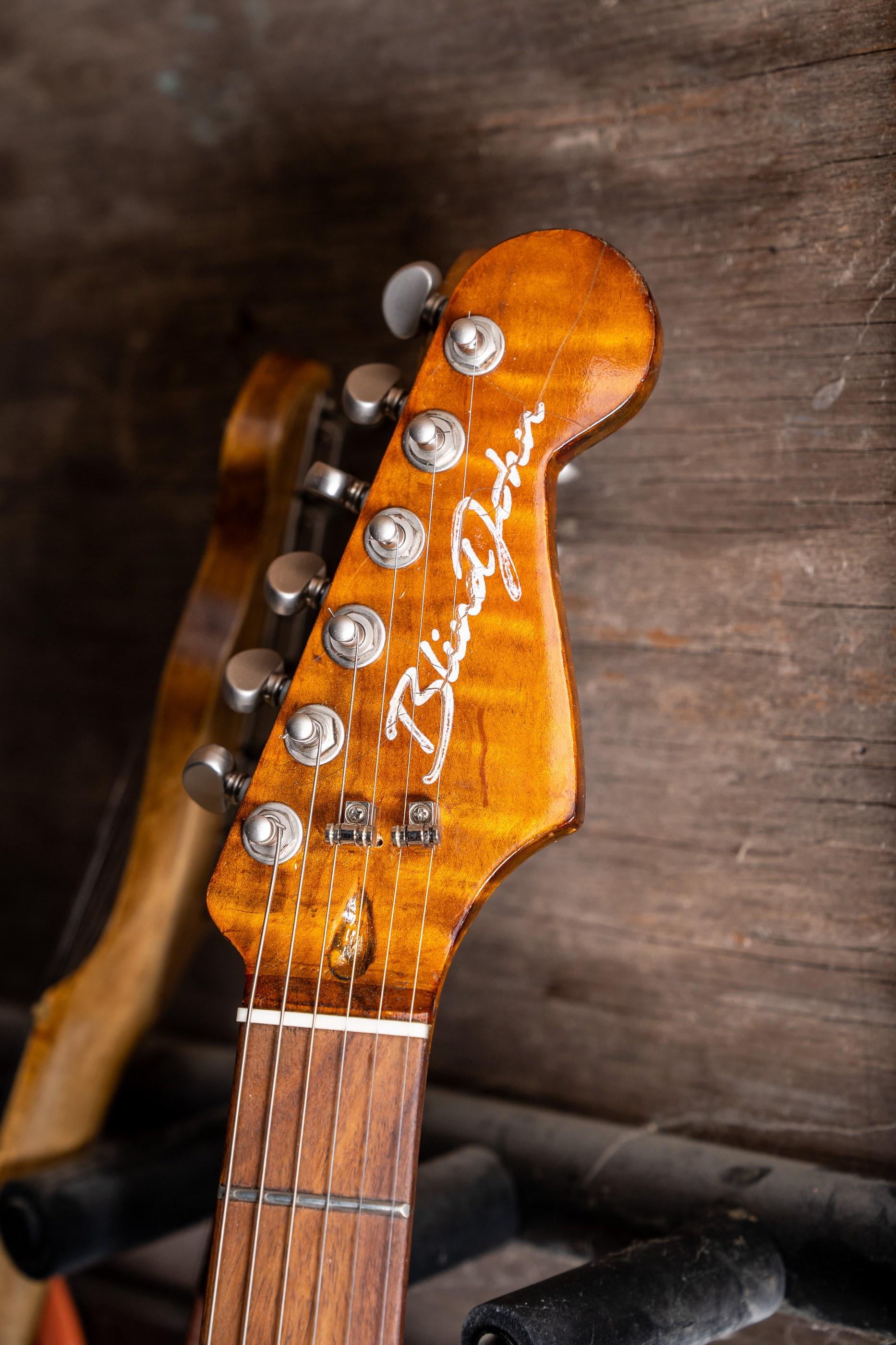
What is a roasted, or torrefied, fretboard, and is it worth it? Again, it's aesthetics. I'm very fond of a roasted maple neck, particularly roasted flame maple. When you're working it, your workshop smells like the best maple syrup you can imagine, which never goes amiss. And it's a much welcome change from the horrible odours of nitrocellulose paint and lacquer.
It's simply roasted. It's heated for a period of time, up to a certain temperature. Baked tends to be darker than kiln-dried, but not as dark as roasted. Some people say it can help stabilise the timber more as well. For me, again, it's a purely aesthetic thing. Roasted flame maple can look breathtaking. If you look at the back of the neck on the DeVille, that's roasted flame maple.
Is it a feel thing as well? I think the feel thing comes more down to the radius of the neck than the timber it's made from.
A matter of taste. But then that's aesthetics.
I have a real thing about a Strat, a black Strat with a maple fretboard. I don't know, it puts my hackles up a little bit, which is ridiculous. It is too black and white, in a way. As a rule, personally, if I was making it or buying it for me, it would never have a black body and a maple fretboard. It just wouldn't happen. And that's purely aesthetics.
I see some beautifully made guitars that are beautiful, but I don't actually like them aesthetically, because there's too much figured timber. I don't like figured fretboards as a rule. I've seen one that I've actually gone, oh, that looks nice. Normally it's like, oh fuck off. I have a real dislike of pale moon ebony, which is a beautiful wood. I mean, truly stunning. It's sort of black, wavy patterned, very stark, pale yellow to the black, almost like swirls in chocolate. I think it looks hideous. I think it's absolutely awful. But then that's aesthetics. If a client came to me and said, I really want a pale moon ebony fretboard, I'd be like, OK, your money.
| Recorded | 11 November 2026 |
|---|---|
| How | A cup of tea and a microphone, cut, not written |
| Who | John |