Why a hand-wound pickup sounds better lumpy
The winds, the variance, the Friday-afternoon pickup — and an Epiphone with a £45 neck pickup nobody could explain.
For years I thought pickups were pickups. There'd be a bit of difference between the low end and the top end and that'd be that. Then I put a properly hand-wound set in my Telecaster and my honest reaction, in the first ten seconds, was: holy fuck. The articulation. The way you can suddenly hear the front end of the note. I'd heard people talking about compressors flattening the front of a note and thought, are these people just talking shit? They weren't. Everything changed.
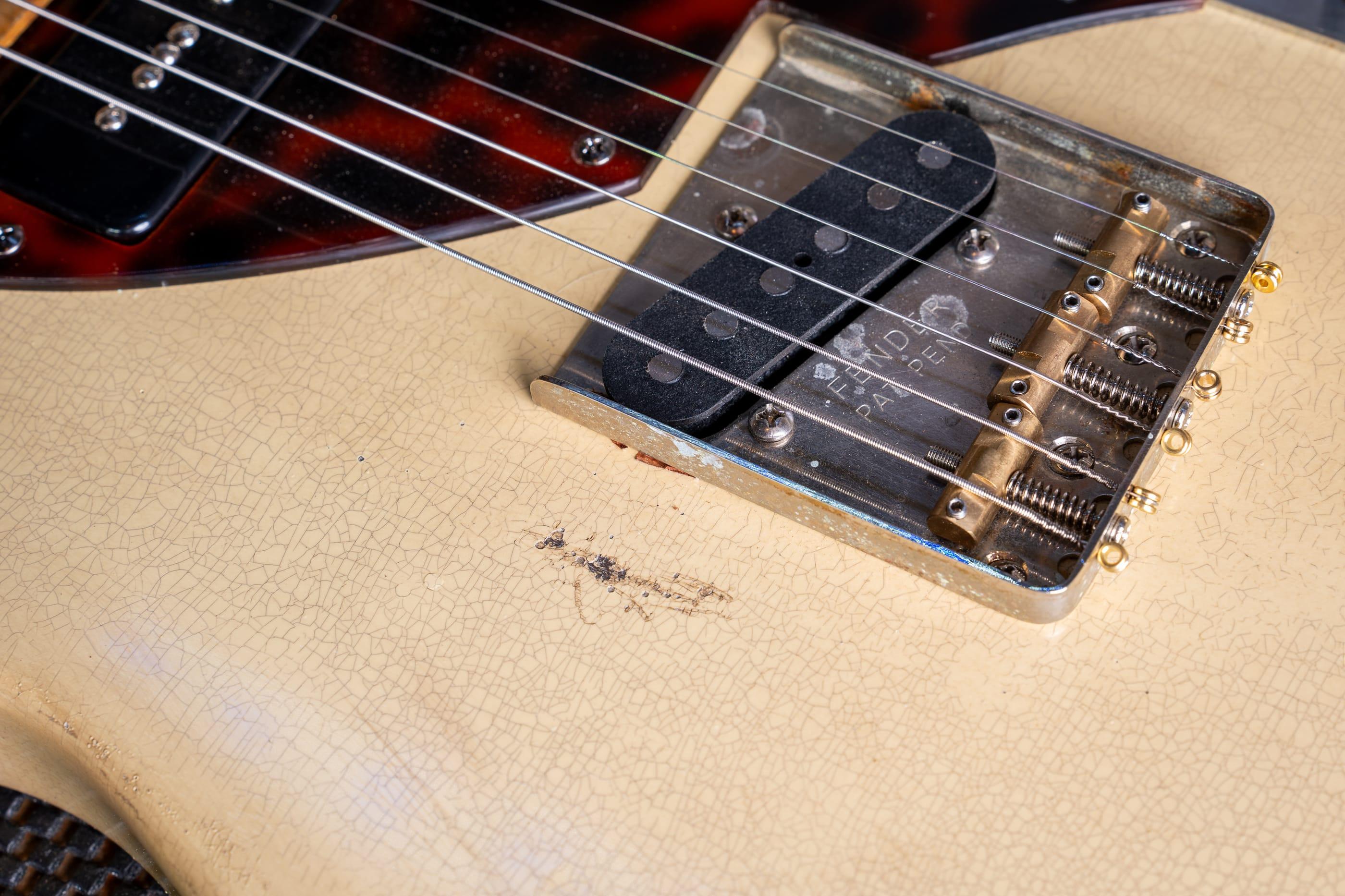
Take the classic PAF. It's not a name, it's a sticker — patent applied for — that Gibson put on the bottom when they'd applied for the patent, and the name stuck. What we mean by it now is that low-to-middle output humbucker from back then. But there's more to it. Back then they were all made by hand, and nobody was particularly interested in counting the exact number of winds, or whether it was scatterwound or vertical. They just did it. Which meant a massive variance. A lot of them were roughly the same, but there's the classic Monday morning pickup and the Friday afternoon pickup. Not a single one you'd call perfect if you compared it to a machine-made pickup. You can see where the wire is. It's lumpy. It's not nice and neat.
That's not what you want. That lack of neatness, that lack of precision, is what you hear once you pluck a string across it. A machine gives you the exact number of winds, the exact spacing, the exact height, and every one identical. Which is consistency, and consistency is a fine thing. But people are gravitating back to hand-wound simply because the sound is that much better. It costs more — a lot more labour time. I've tried winding my own a couple of times for shits and giggles and it's phenomenally difficult; the wire is so thin it snaps if you look at it. Three thousand winds on a plastic bobbin on a spinning machine. There's a real art to it, and I don't have it. The people who wind mine do.
Here's the story that proves it. A client rang up last year with an Epiphone Les Paul: something's wrong with the pickups, they're not balanced. Bring it over. I plugged it in and played it for two minutes and said: no, you're wrong. The bridge pickup is a normal Epiphone pickup, exactly what I'd expect. The neck pickup — if you ever sell this guitar, take that pickup out and keep it. Something was up with that machine the day it was made. Something wasn't calibrated. They probably got two dozen dog-shit pickups off that run and one or two that are an absolute dream, and he'd got lucky.
So to balance it I put a hundred-quid pickup in the bridge, against a forty-five-quid factory pickup in the neck. It sounded glorious. He couldn't get his head around it — a pickup worth nearly as much as the guitar in one position, balancing perfectly against the stock one in the other. I can't guarantee that's what happened at the factory. It's the only explanation I've got. And sound is sound. If it sounds great, something's happened.
| Recorded | 9 September 2026 |
|---|---|
| How | A cup of tea and a microphone, cut, not written |
| Who | John |