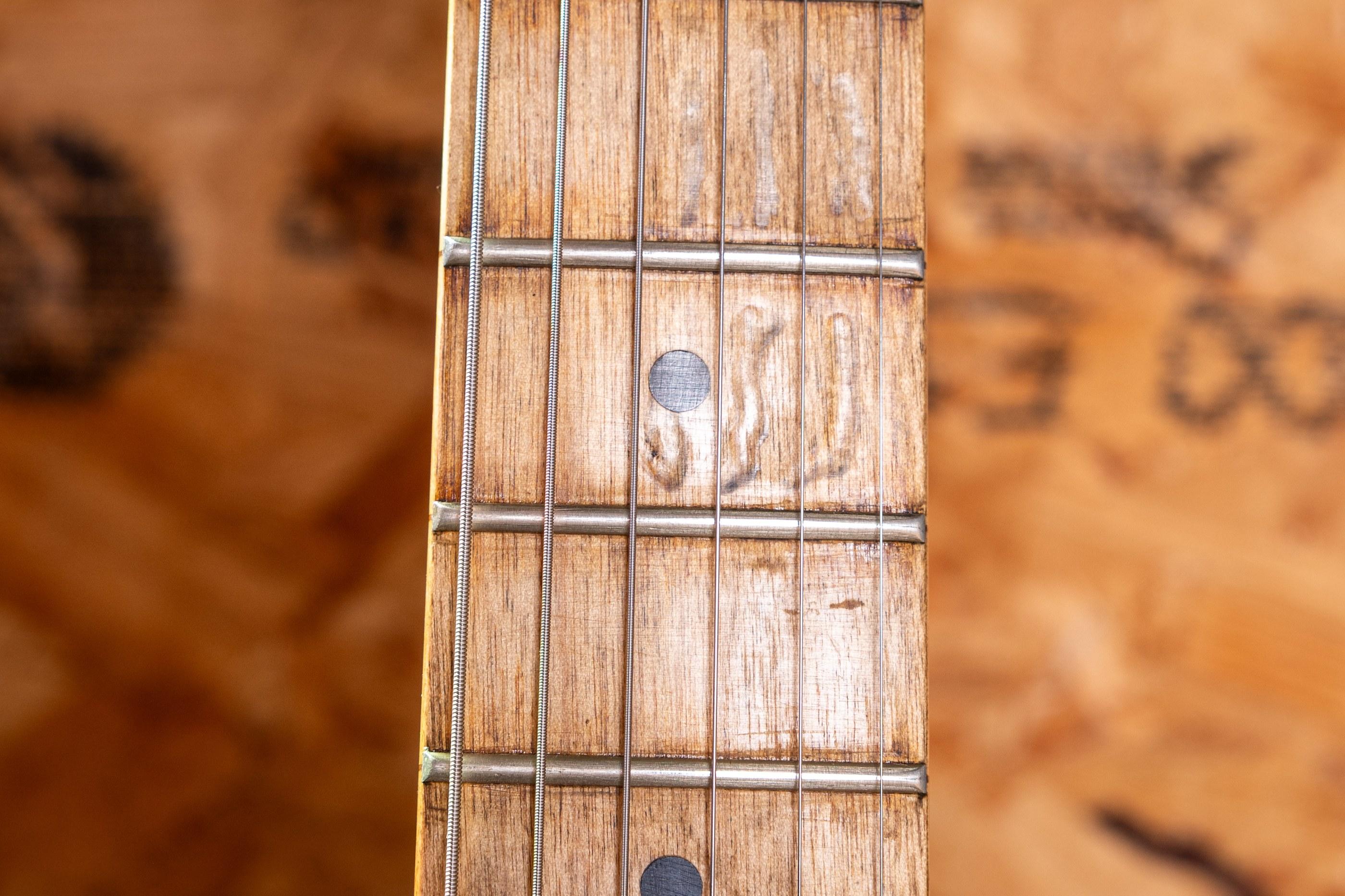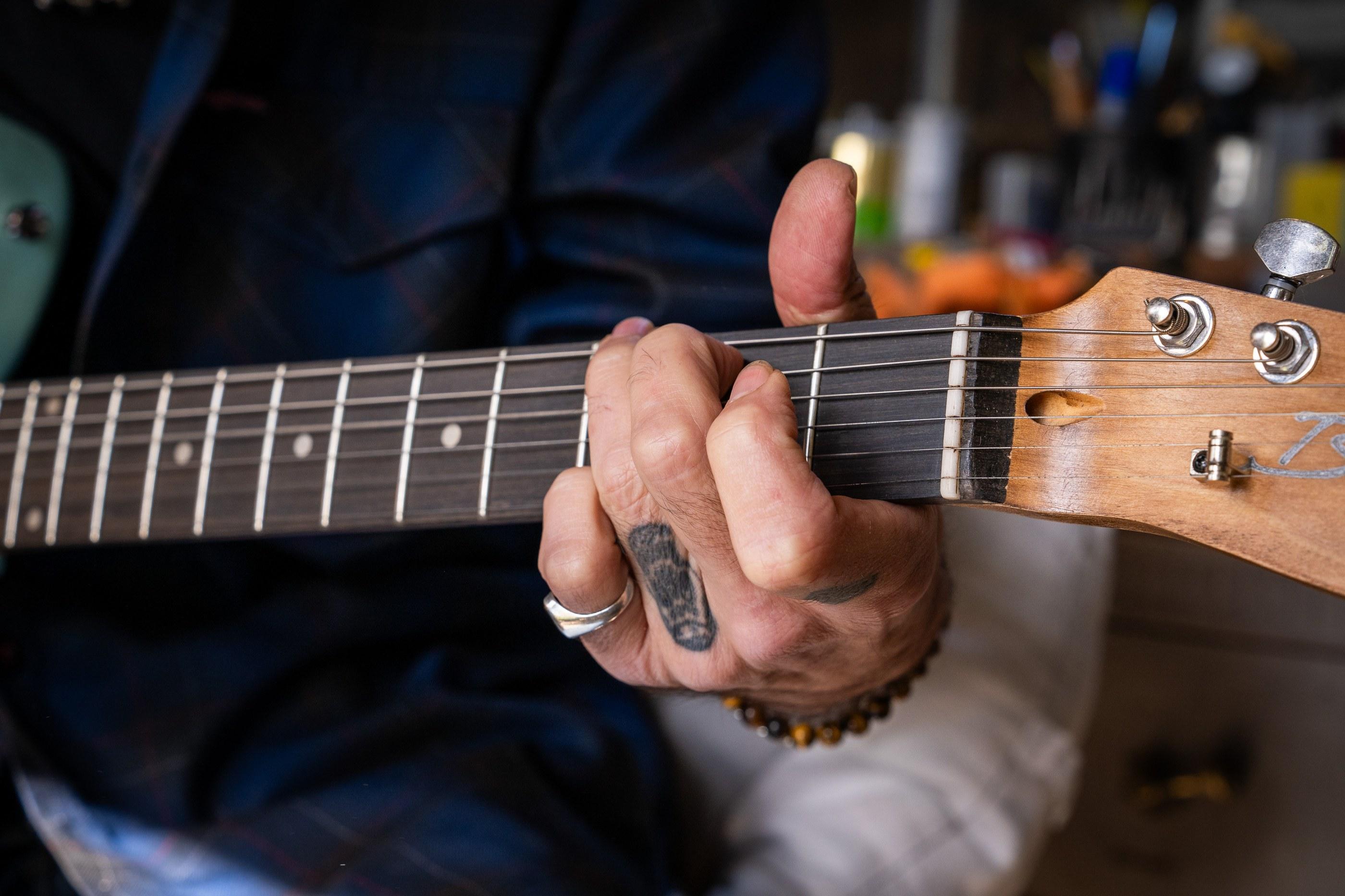
Types of guitar frets: size, height and what they're made of
Guitar fret sizes explained from the bench: nickel silver or stainless steel, narrow, medium tall and jumbo, what a taller fret does under the finger, a fret dress and a re-crown, and when it has to be a refret.
Three things. Size, height and material.
What are the different types of guitar frets? Size, height and material. Width and height, and what they're made of.
| Vintage narrow | About 2.0mm wide, 1.1mm tall, the wire on old Fenders: low and slim, with the fingertip on the wood |
|---|---|
| Medium jumbo | About 2.6mm wide, 1.1mm tall, wide and low, smooth to slide along |
| Narrow tall | About 2.3mm wide, 1.4mm tall, slim with height: a light touch, and room under the string for a bend |
| Medium tall | What goes on ours unless you ask, a size that works for most hands |
| Jumbo | About 2.8mm wide, 1.4mm tall, the biggest: bends and vibrato come easy, and a heavy hand pushes a note sharp |
| Nickel silver | Copper, nickel and zinc, with no silver in it, the traditional wire: it wears, and it takes a dress |
| Stainless steel | Far harder, and it lasts far longer, mirror bright, and hard on tools |
Sizes are nominal. Every maker's wire runs a little different.
Nickel silver or stainless. I can polish them glass smooth, then knock them back.
Traditionally guitar frets were made from nickel silver, and still are. I like to use nickel silver. People have been using stainless steel frets more recently, because it's come down in price, and it's a lot more hard wearing.
But as I found out to my cost, check what tools you're using before you start nipping stainless steel frets. I had a lovely fret nipper that I spent about eighty quid on, and didn't look that it wasn't recommended for stainless steel frets. I did four frets, went to the last one, and the blade snapped. I was not best pleased about it.
So it's obvious stainless steel is a lot harder wearing. It's also very shiny, which for me is not a plus. While I like nicely smooth, polished frets, if I'm producing a guitar that looks sixty years old, with mirror-finished stainless steel frets that you can see your face in, it's going to look a little bit out of place. Not that I haven't seen vintage guitars with stainless steel refrets. I have. But that's not a route I would choose to go down. I tend to go down the nickel silver route, because I can polish those frets up until they're absolutely glass smooth, and then I can knock them back but still keep them absolutely smooth, so it looks like there's some age and wear in there.
Are the frets on a relic'd guitar worn? No. The fretboard may be, but the frets are brand new. It's purely appearance.
Size. To me it's always been about feel.
Size is really a preference. If you've been used to narrow frets and then you go to jumbo, or you've been on narrow mediums and then you go to medium tall, you're going to feel a difference. Whether or not you like that difference is entirely down to you.
I use medium talls as a general standard, which is a size that works for most people. I use jumbos on the two Juniors that I do. But I haven't had many requests for different sizes. To me it's always been about feel.
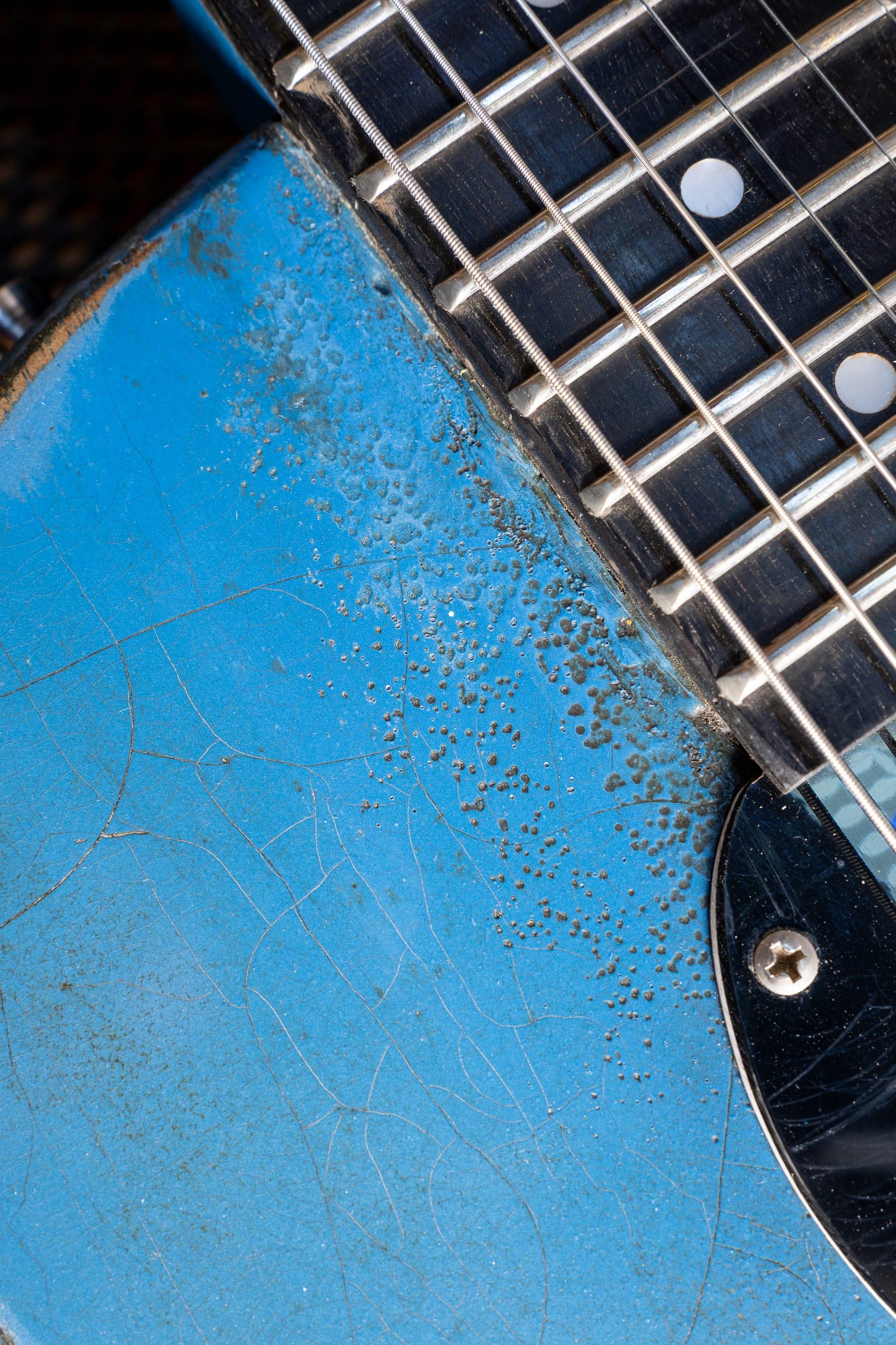
What height does. Push a bit harder and you will change the pitch.
With tall frets the strings are higher off the board, across the entire radius, than with mediums or lows, which means you have to get your action right in relation to the height of the frets. If your action is too high, it doesn't matter what the frets are, it's going to be difficult to fret chords and fret notes. If your action is too low, it's going to buzz.
Why would someone go for jumbo? Feel. With jumbo frets you can touch the string to the fret so that note rings out, but then if you push a bit harder, because of the gap between the top of the fret and the fretboard, you will change the pitch again. It's a more minor example of a scalloped fretboard, which let's not get onto, please. They look awful. Scalloped fretboards have the wood between the frets actually scalloped out, and it changes the way that you bend notes as well.
A fret dress. Microns are important when you want to keep a guitar in tune.
When would you know your frets need some work? You can tell, because you will have dents in the frets. The frets will be worn down, literally from playing and bending.
A fret dress is simply a fret level. You level the frets in relation to each other, so they're all perfectly flat across the radius. I use a long piece of boxed aluminium, perfectly level, with emery cloth on it. I have two, and each side's got a different grade on, and I go down the grades. This is the way that most people do it: tape the fretboard off between the frets, permanent marker across each fret, and then you can literally move your bar with the abrasive on it back and forth, up and down. You can see where it's high and low, because where it's low you'll go across, lift it off and look, and there'll still be ink left. Once that ink's gone, down the grades, it's all level.
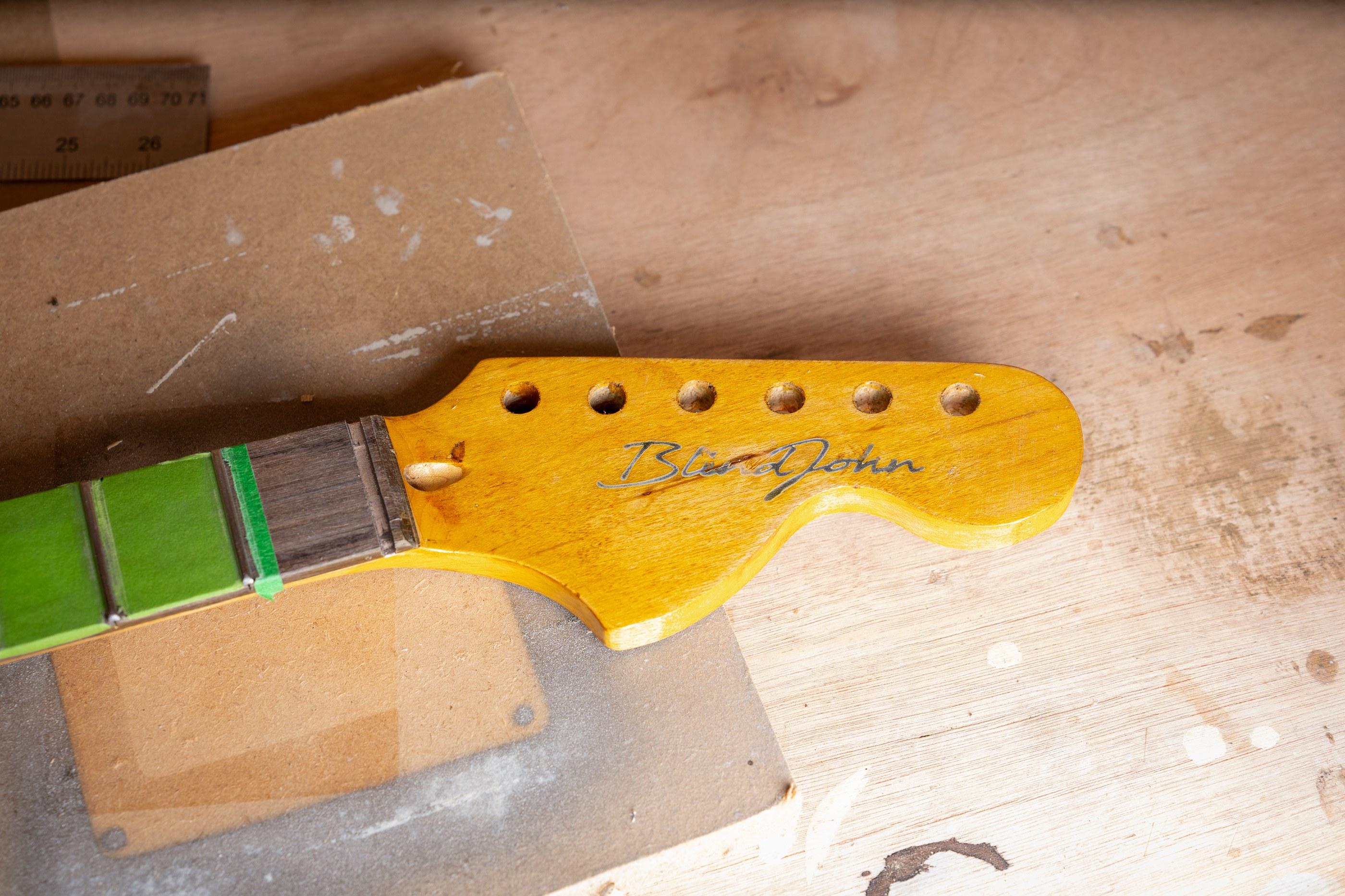
But you have a flat spot across the fret, and that affects your intonation, because that's going to shift the distance of the frets in relation to the bridge and the nut. We're talking microns here, but microns are important when you want to keep a guitar in tune. You're going to find that the guitar's in tune some of the time, on some of the things you're playing, and not on others.
So what you need to do then is re-crown the frets. Where it's flat and then curves over, you take those shoulders and bring them back in, so that the top is a very thin strip in the middle of that fret. I have a couple of tools. I have a file that's literally that shape, that I go across. And then I have a much smaller one, essentially a holder for different grades of emery cloth and wet and dry. It has a tiny little radius and is about 20 mil across, so I can have the paper in that, and it creates that perfect shape to finish it. Other folks use different tools for it, but they're my personal favourites.
When it's a refret. Holy shit, how are you even playing this?
When do you need a full refret? When there's no material left, or the frets are literally falling out. I've seen both, as I think most luthiers that do repairs will. You get guitars across your bench from time to time that you look at and go, holy shit, how are you even playing this? Because there are loose frets that are actually moving, or there's almost no material left on certain frets. And being that you don't play equally up and down the fretboard, nobody does, it's going to wear in different ways.
I had a Strat in very recently for a rewire. The client has had that guitar from new, twenty-seven years, and he's been playing it regularly in different bands from being a teenager until his early forties. He doesn't play a lot of lead, but you could see the actual dents in the frets where he played. The first five frets were really heavily dented. I gave it a dress and a re-crown, but that didn't take it all out, and to be fair there wasn't enough material left for me to take them all out. So that one will need a refret. He's thinking about bringing it back next year. It is going to feel very, very different.
| Recorded | 11 November 2026 |
|---|---|
| How | A cup of tea and a microphone, cut, not written |
| Who | John |