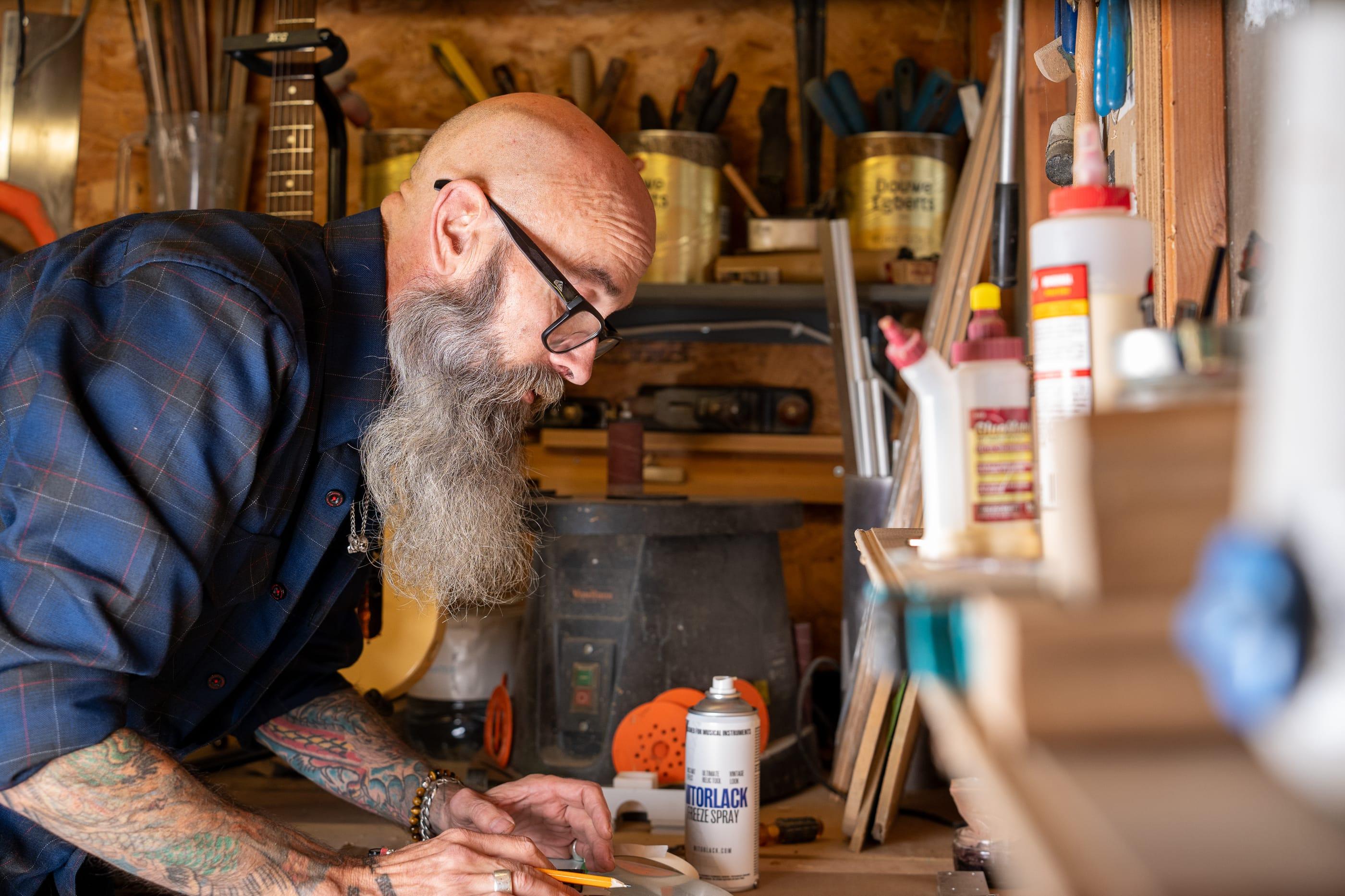
Music has always been my constant. Wherever I am, whatever I'm doing, I need it — whether I'm listening or creating. It doesn't matter which.
Becoming a guitar maker was never part of the plan when I left school 40 years ago. Funny how life works like that. It throws you down a path you never saw coming, only for you to realise it's the one you were meant to be on all along. As the Buddhist saying goes, everything that has happened had to happen for you to be here now. It's true — and I wouldn't change a thing.
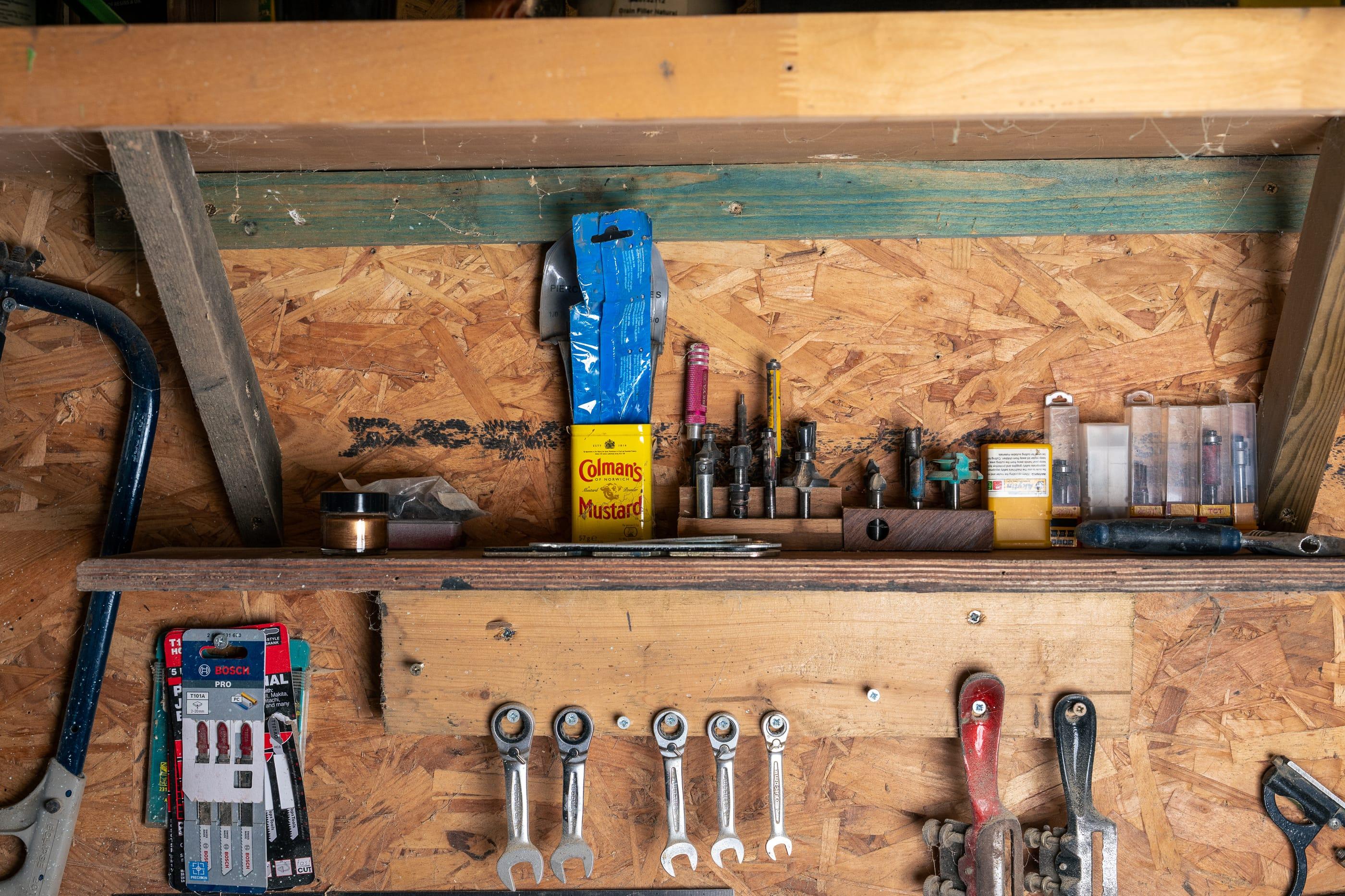
Somewhere along the line, I developed a fascination with the old, the battered, and the discarded. Things with stories to tell. There's a certain je ne sais quoi to them, as the French would say — and for me it's relics: beaten-up, well-used, slightly shoddy objects that look like they've been to hell and back. You can imagine the lives they've lived.
I can't stand the look and feel of modern "new." It feels soulless to me. No judgement — if that's your thing, that's your thing. It's just not mine. I like weathered. I like beat up. I like used. I love old Levi's on the brink of falling apart, rat-rod motorcycles, sleeper custom cars in a vintage style, and sheer originality. New dressed as old. All of it feeds directly into what I do.
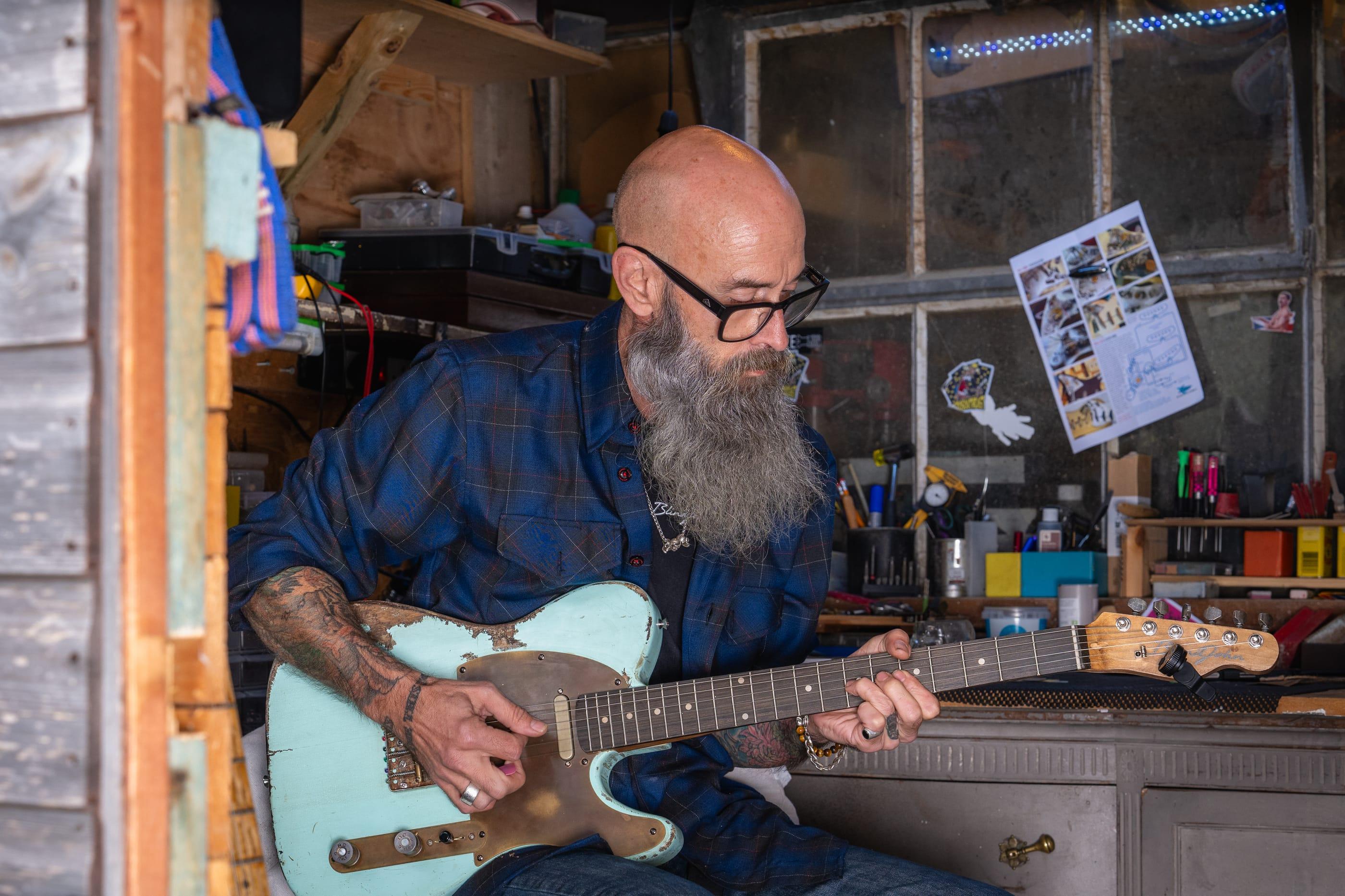
That influence shows up everywhere — from four-string resonators built from suitcases and reclaimed oak, to custom Telecasters that look like they've been played by the Devil himself… and survived. Not that every guitar I make has to be that extreme. Most of us live somewhere in the middle ground, and that's really the crux of it.
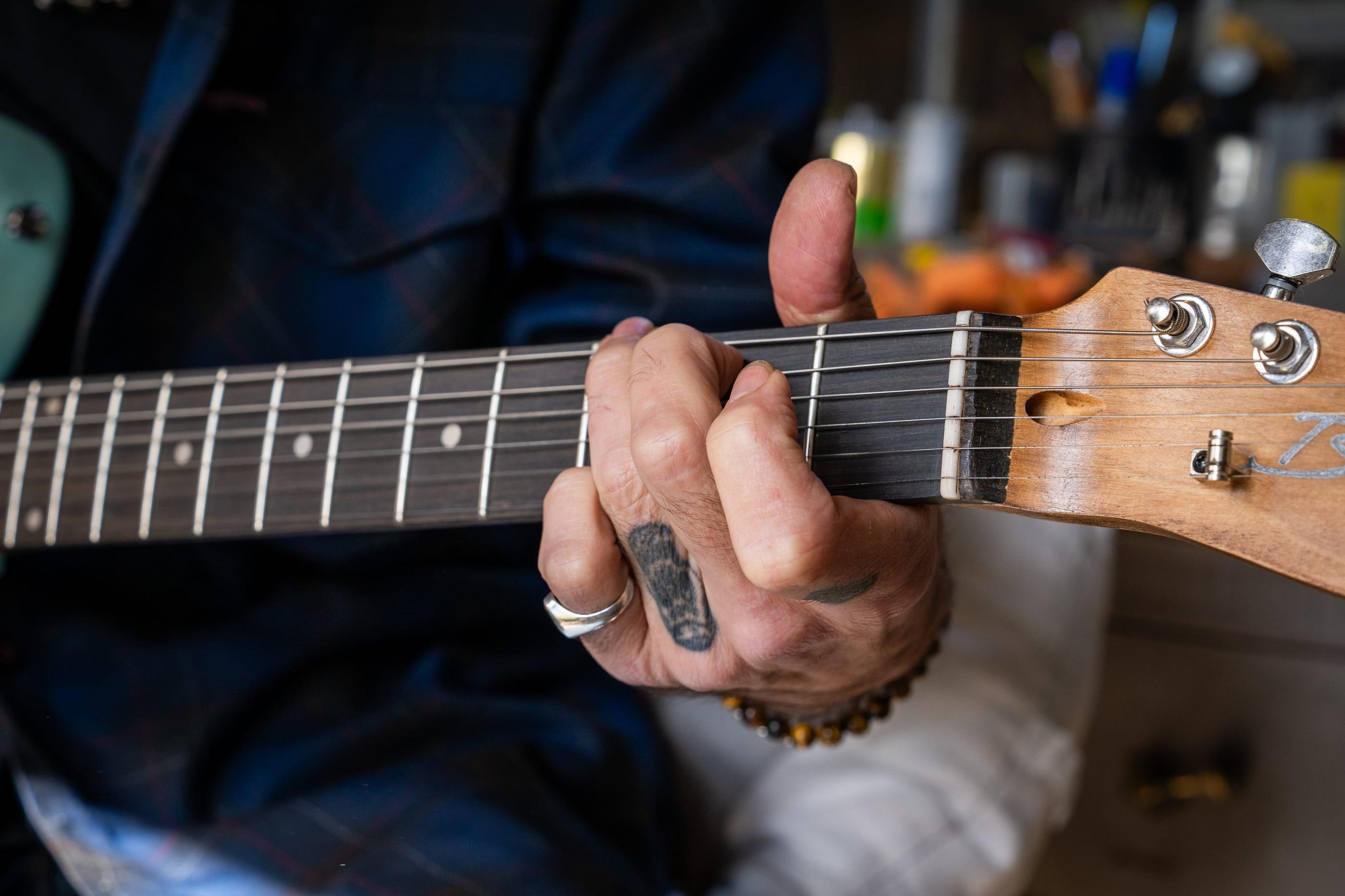
If the music's playing (and it always is) and I'm working timber, then all is right with the world.
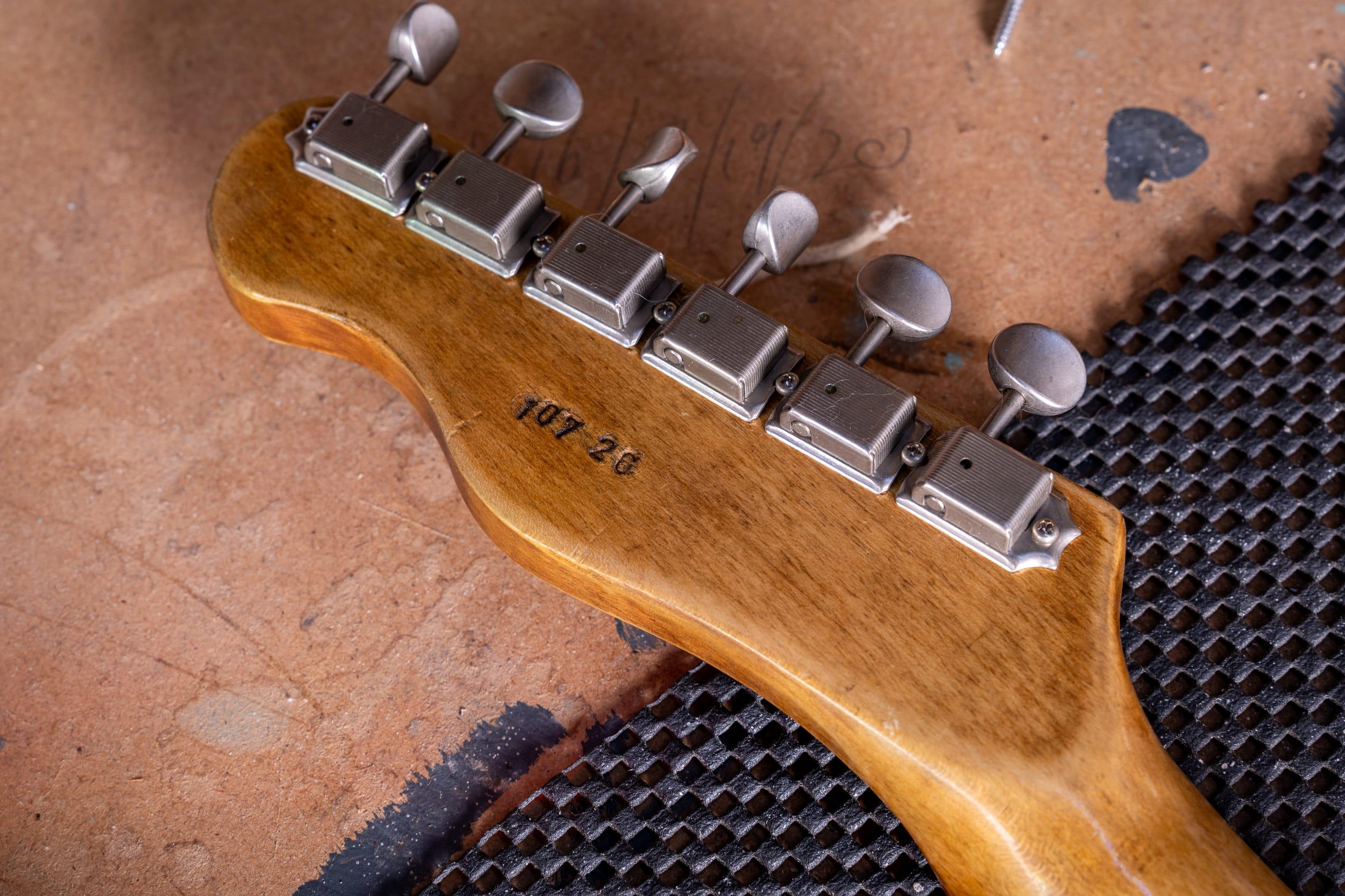
When you buy a Blind John's guitar, you're getting a one-off — something that genuinely looks like it's already 60 years old, feels properly played-in, and is built to last another 60. A guitar that will continue to age, with you. A guitar with stories to tell…
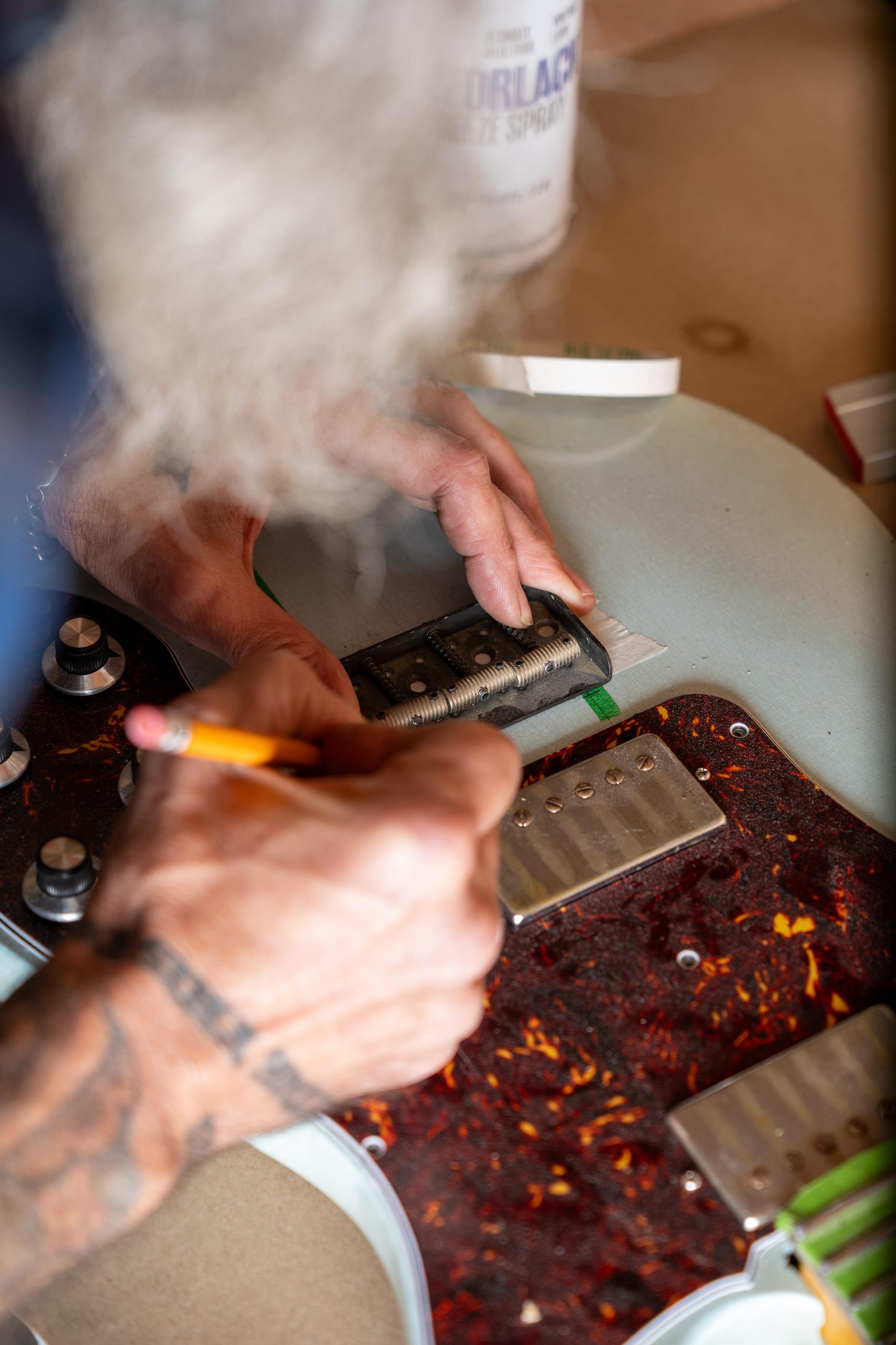
I love what I do — passionately. It's one of the few times my mind quietens, when I can focus and let everything else bleed away. I can, and do, get lost in it — sometimes to an almost pathological degree. If the music's playing (and it always is) and I'm working timber, then all is right with the world.
I'm not cut out for the rat race — the absolute shitshow that it is — and that's another reason I do what I do. So, if you're looking for a unique custom guitar made by a slightly weird, grumpy, stiff, late-fifties skateboarder who's been around the block far too many times — the living embodiment of Generation X — then you're in the right place.
I've built guitars for clients all over the world: from York to New York, Manchester to Maine, Lisbon to Lima, Perth to Paris, and Birmingham, Alabama back to Birmingham, West Midlands. Instruments for people to tell stories, because stories matter… and music matters.
I guess, for me, the first album that made me realise music wasn't just sound — that it mattered — was in '79, when the Clash released London Calling. I was ten. We'd just moved from York to South East London. Didn't like school; school didn't like me. A kid with a North Yorks accent in a South East London school: never gonna go well. But I heard London Calling and something snapped in my brain, and I've been a Clash fan since. I don't remember understanding why it was an important album. Something in me knew it was. From there I absorbed music like a sponge, going from punk to blues and back via everything in-between. And London Calling is still on rotation… over 40 years later.
Look… some folks think punk is just a phase teenagers outgrow, like skateboarding, but to me, again, like skateboarding, it's a lifelong philosophy. It's that same raw, independent spirit you find in the best blues music — a refusal to let the big corporate machine tell you how to live, how to think, or what to create. Now that I'm in my late fifties, being a punk doesn't mean causing chaos, or wearing bondage trousers and Vivienne Westwood tartan… it means keeping my freedom, trusting my own hands, and doing things my own way. That's exactly why I do what I do today, building and sharing authentic, high-quality guitars for people who still value the real deal.