Which wood is best for an electric guitar body?
The great tonewood debate: alder, swamp ash, mahogany and maple, reclaimed timber, figured and bookmatched tops, binding, hollow and chambered bodies, the exotic stuff, and the short answer.
The great tonewood debate. Does it matter?
You've just opened up the great tonewood debate. Does it matter? From my view it matters. The guitar will always be a sum of its parts, but I do think the tonewood matters, because different timbers do give you a slightly different resonance. It's not like an acoustic, where you're not amplifying an electrical signal across magnets by the strings. Which wood is best? I don't think that question can ever be answered.
Going back to the fifties, alder was quite popular, because it grain-fills easily and it's easy to prep and spray well. Swamp ash is a little bit denser. There's a little more bottom end on the likes of swamp ash or mahogany than there is on, say, alder or maple, and alder has a little less sustain than swamp ash or mahogany. Rosewood fretboards are a little bit darker in tone than maple, maple being a little brighter. Those are differences I take for granted, and I take them on board subconsciously when I'm building a guitar. Not necessarily for a client, because what a client wants is what a client wants.
Reclaimed timber. If I can get my hands on it, I always will.
I often use, and have often used, reclaimed timber. There are issues with CITES regs there, in that I couldn't use a lump of Brazilian rosewood and then be fine sending it abroad. It doesn't work like that, in some ways sadly. But if I can get my hands on reclaimed timber, I always will, simply because it is more sustainable than cutting down fresh growth and then waiting the two, five, eight, ten years or whatever it is, depending on the timber. But that's getting harder and harder to find. Maple's not so difficult, because there's an awful lot of furniture that has maple frames.
I once pulled an old leg out of a house clearance. I thought it was a furniture leg at first, and it wasn't until I tried to lift it that I realised it was a grand piano leg, a broken one, made of rosewood. I cut about a dozen cigar box guitar fretboards out of it.
A figured top. Some guitars just wouldn't look the same without it.
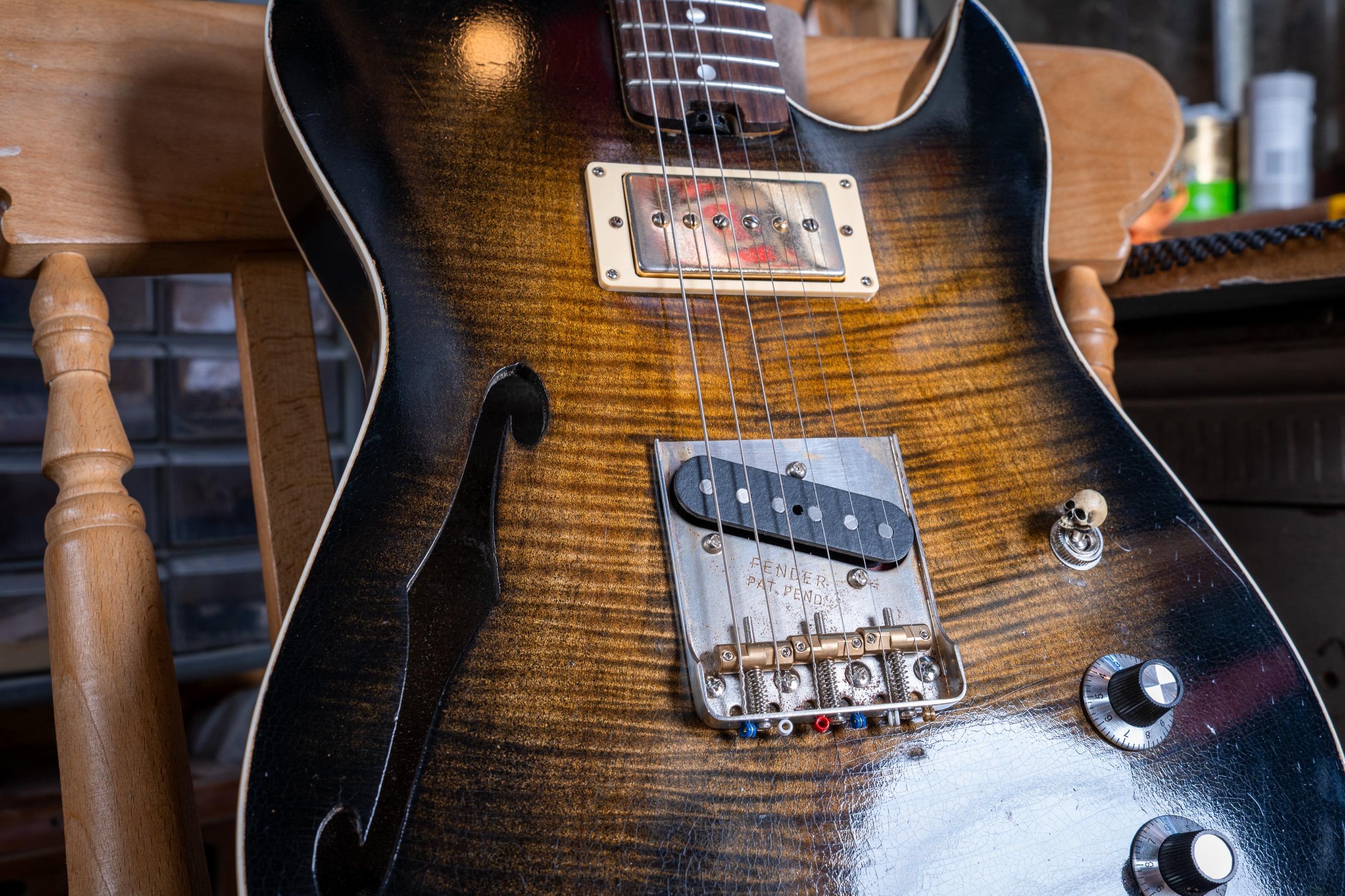
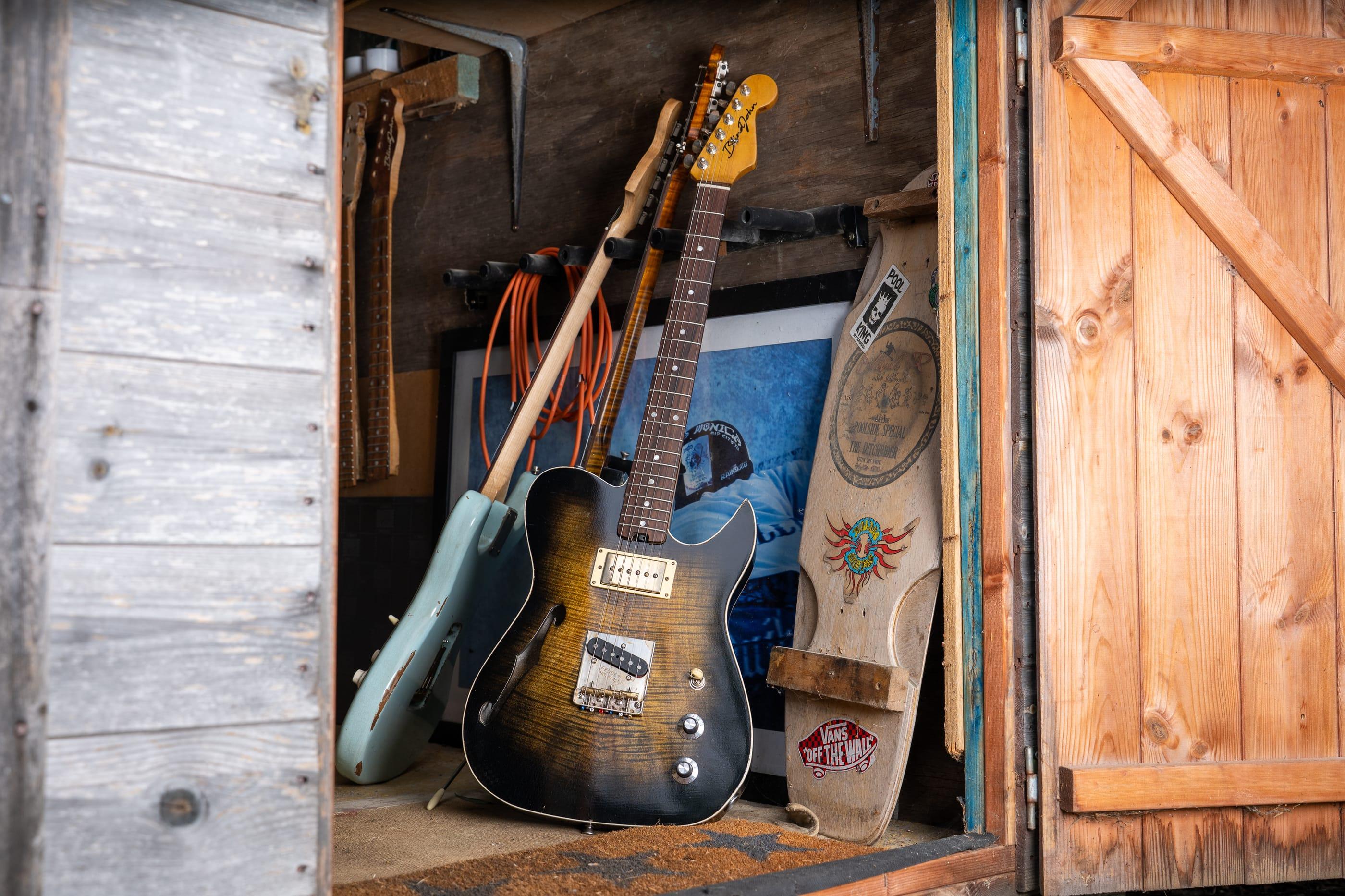
Some guitars just wouldn't look the same without a figured top. There is a world of difference between a vintage Les Paul with a flamed burst top and a modern Les Paul with a non-flamed burst top. Forget the history and the provenance. Just looking at the two side by side, there's a world of difference in appearance. The DeVille has a figured flame maple top, hardly figured. You can't see a lot of it until it catches the light in certain ways, and you wouldn't get that with a non-figured top.
A figured top is a timber top that's laid on top of the guitar, bonded down, glued down, that has figuring in it, be it a flame-type pattern or a quilted-type pattern. Naturally occurring. If you look at the tops on the Lost Model or the DeVille, they're both what we term figured tops.
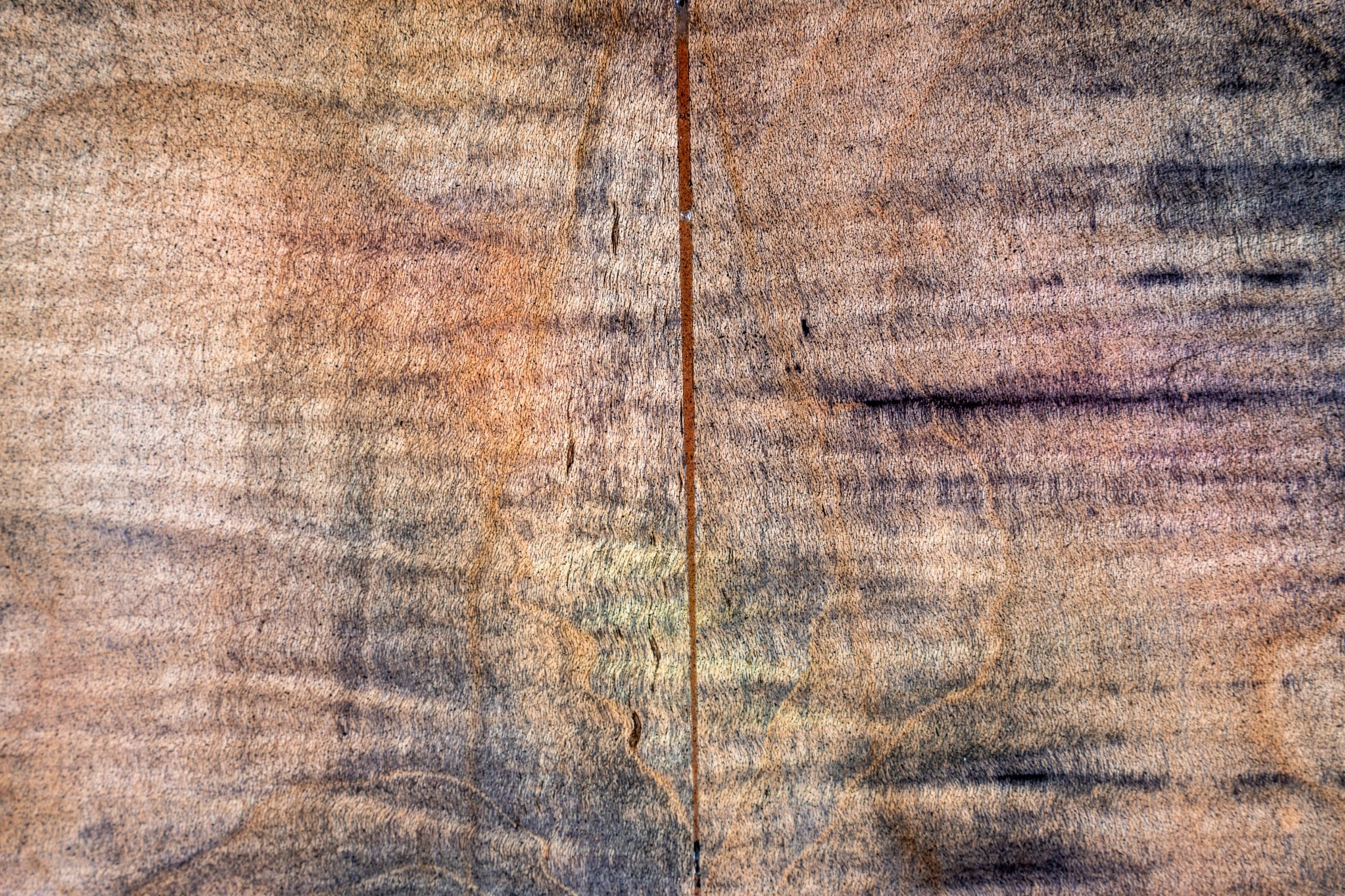
They're also bookmatched tops. When you have a billet, say 250mm wide and 56mm thick, you take a slice off that, 10mm, longitudinally, and then flip it over, and you have two pieces the same that mirror each other. You can put those together and essentially have a mirrored, uniform pattern with a line down the middle. And when it's done well, those lines actually match up perfectly. In appearance, it becomes one figured piece, the pattern uniform on both sides.
Bonding a top on could be for a number of reasons. It could be a hollow body that you wanted a different top on. It could be a solid body that's chambered, like the modern Les Pauls are. It could simply be a top because you have a certain pickup configuration that needs wires run from, say, the top left to the bottom right, and you can't do that unless you have the holes to do so. You can't drill holes around corners when making guitars. That would need routes cut out, and then something put on top so that it becomes a route that's enclosed.
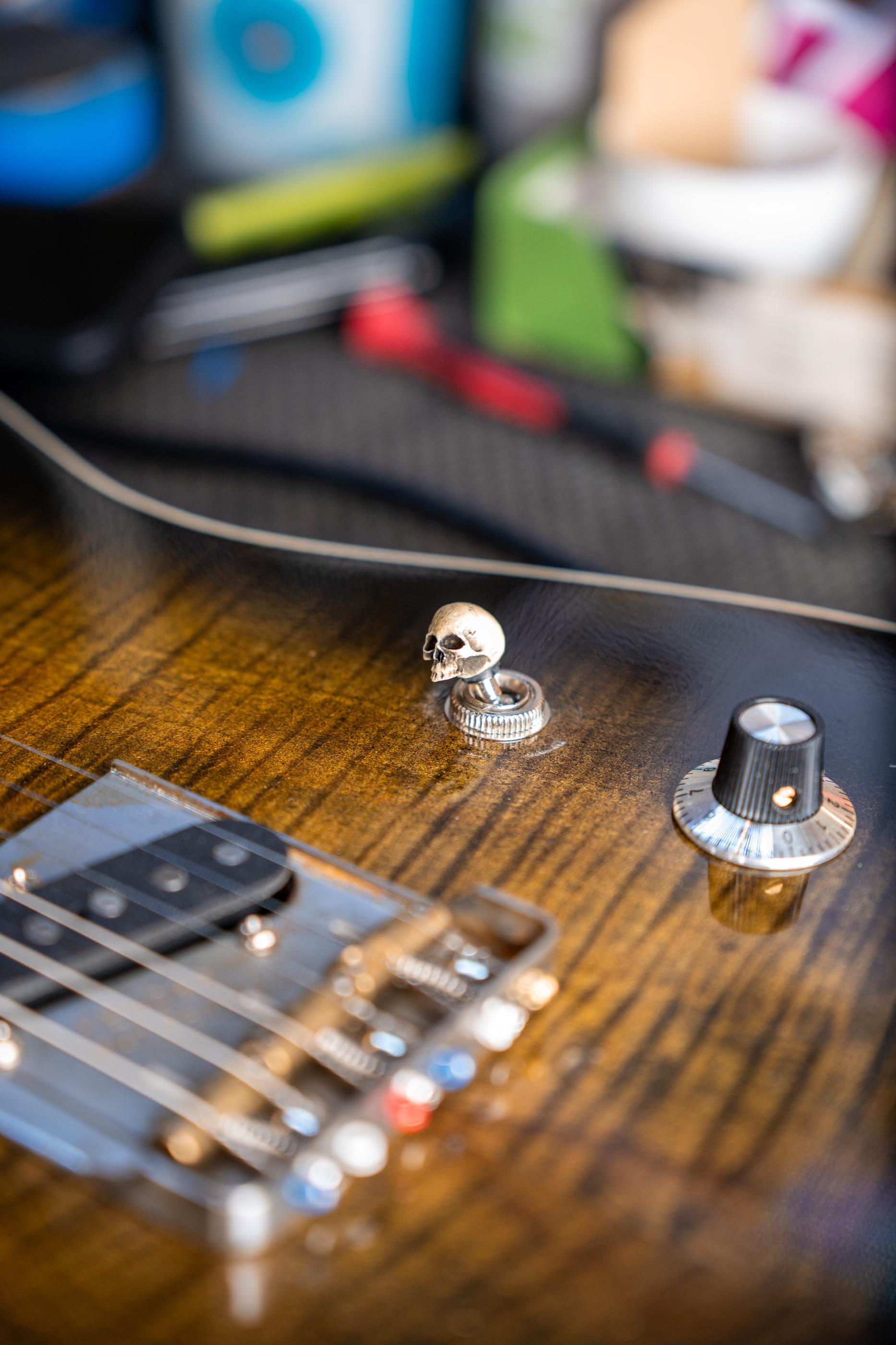
Binding. Almost exclusively aesthetic.
Some people like what's sometimes referred to as natural binding. If you have, say, a six or even a ten mil top, which is a bit big, five or six mil is the average thickness for tops, those patterns, be it flame or quilting or whatever, will run down the side of the grain too. So that will go around and give you almost a natural binding.
Would you cover that with a binding? Not always. The DeVille is a great example. It's a wine burst, so it's a deep translucent red fading out to a black edge. Now, if I didn't have binding on that, it would just be a black edge. You wouldn't see the edges of the timber regardless. And it wasn't designed to be a bright, in-your-face figured top. It was designed to be subtle. So in that case people will often use a binding. Binding on electric guitars tends to be almost exclusively aesthetic. It doesn't have any function.
Hollow and chambered. Tone. Pure and simple.
Why do some of my guitars have hollow or chambered bodies? Tone. Pure and simple. When I do chambering, it tends to be for a weight relief reason. But a hollow-body guitar and a solid-body guitar will give you very different tonal properties, or qualities, whichever way you want to look at it. So it depends on what sound you're after.
Easy example. The Gibson 335 originally had PAF humbuckers in it. The Gibson Les Paul had the same humbuckers in it. Those two guitars sound radically different when played through the same amplifier on the same settings. The DeVille's a hollow body.
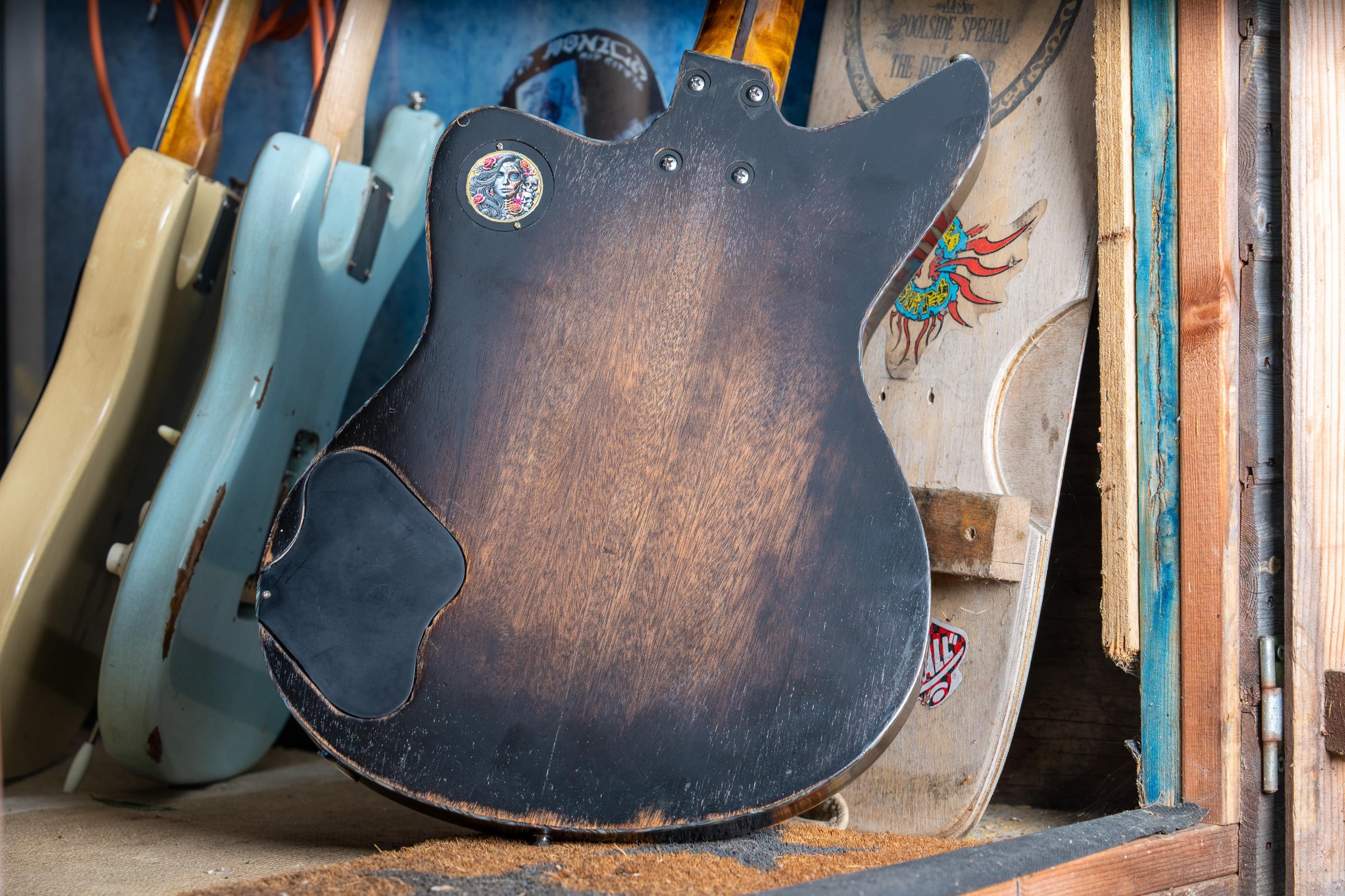
Does body shape have a massive impact on tone? I don't know. There are certain shapes that will. If you look at acoustic guitars, a dreadnought will sound way different to a parlour, because there's that big-box booming resonance of a dreadnought, and not as much movement in a parlour because it's smaller. It's smaller bits of timber, so the top doesn't vibrate as much. There's going to be an element of that in an electric, be it solid-bodied or hollow or semi-hollow or even chambered. Is it enough to make a tonal difference that you can hear? I'm not sure.
And pickups will also react differently in hollows or semi-hollows to solids. Unpotted pickups can be a feedback nightmare in a hollow-body guitar, particularly on stage, where your levels are that much louder. I did put an unpotted pickup in a Thickline once. I just couldn't. Even at lower volumes, you got within ten feet of the amp and it would just start screaming.
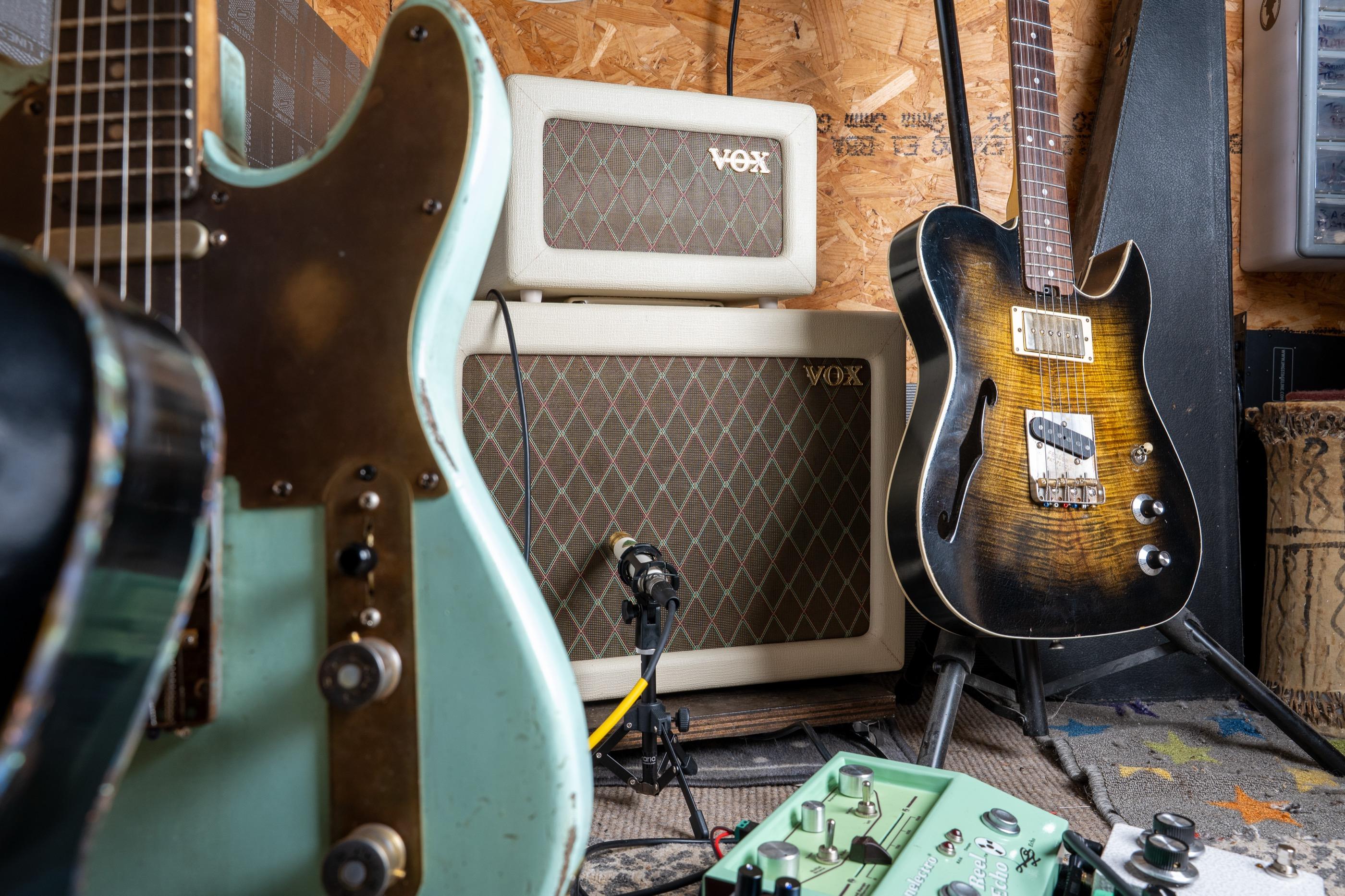
I'm not entirely sure of the dates when people started potting pickups as a sort of standard, but it does improve feedback issues, amongst other things. A true vintage PAF humbucker from back in the day wouldn't have been potted. And it does change the tone. An unpotted pickup against a potted pickup that's made identically will sound different.
If someone wanted it lighter without chambering, I'd have to go for a much lighter wood. The only time I've found a wood that just would not have needed chambering was one bit of southern yellow pine, that I made two out of. That was unbelievably light. Ridiculous, to the point where for the first six, nine months that particular bit of timber was kicking around my workshop, I was convinced it wasn't what I bought it as.
The exotic timbers. Some people love that. Others hate it.
Does the wood affect the price? It depends on what you want. A wood nobody else in the world has got? Going that far would be expensive. There's a huge range of absolutely stunning burl tops. Burl is a figuring that's actually caused by fungus (one way it happens, anyway: a tree under stress or carrying an injury will throw one too). If you see a tree growing and it has a random sort of lump, that's a burl, and the timber that comes from that can be incredibly highly figured. Not all of it's applicable to a musical instrument, but any burl will be very figured if it's cut through the right way. Some people love that. Others hate it. Some people stabilise it with resin, because burl can be notoriously unstable.
I was lusting over some guitar porn this morning, sent by my wood supplier, the lovely Neil at Feel Good Wood, who I get most of my timber from, probably 90%. Lovely guy, lovely stock. He has some stunning pommele sapele. It's a form of mahogany, faster growing, a bit more sustainable. That was an entire body blank, thick enough to make a whole body out of. Obviously you don't get as much of that from a tree. Timber like that is why more people use a figured top than an entire body, simply for cost reasons. However, it's not unusual to see entire bodies made from that sort of timber.
You can go from there to things like camphor. It's one of the most beautiful timbers on the planet. It naturally has an incredibly glossy gold lustre to it. To work? Horrific. Incredibly dense.
Desert ironwood, again, can look beautiful. Again, not cheap, but so dense. I had a piece of figured ironwood I was given as a sample by a friend in the States. It was probably big enough for one knife scale, the side of a knife handle. I put a big old hand plane across it. It didn't have an expensive blade in it, just one from Screwfix. Not the cheapest blade. There was a tiny, tiny raised knot in it. I went with my back, full weight against it, across it. It kind of caught the first time. The second time it hit this knot and it stopped dead. It broke the plane blade. There was a k-ching, a bit of metal hit the table and then the floor. The blade had just fractured. A piece about half an inch wide and three inches tall just cracked and fell out.
Hear with your eyes. The first thing you do is hear with your eyes.
There is a lot more variety in fretboards in boutique guitars and custom orders. I don't tend to use highly figured fretboards, because in all honesty I don't actually like them. Being brutally honest, I think even with custom guitars people are going for a look. It's that thing about when you're buying a guitar: the first thing you do is hear with your eyes.
If a guitar makes you want to pick it up, you'll play more, you'll naturally learn more, you'll play better. So is the best wood the one that makes you want to pick it up and play? I think ultimately that's the crux of it. But I think it's subtle.
If a client wants mahogany, I'll make it in mahogany. If somebody comes to me and says, I want a guitar, but I want the body made from basswood, I'll say: are you sure about that? Because it's not as hard-wearing. It is softer.
Does the wood actually change an electric guitar's tone? Yes.
| Recorded | 3 November 2026 |
|---|---|
| How | A cup of tea and a microphone, cut, not written |
| Who | John |