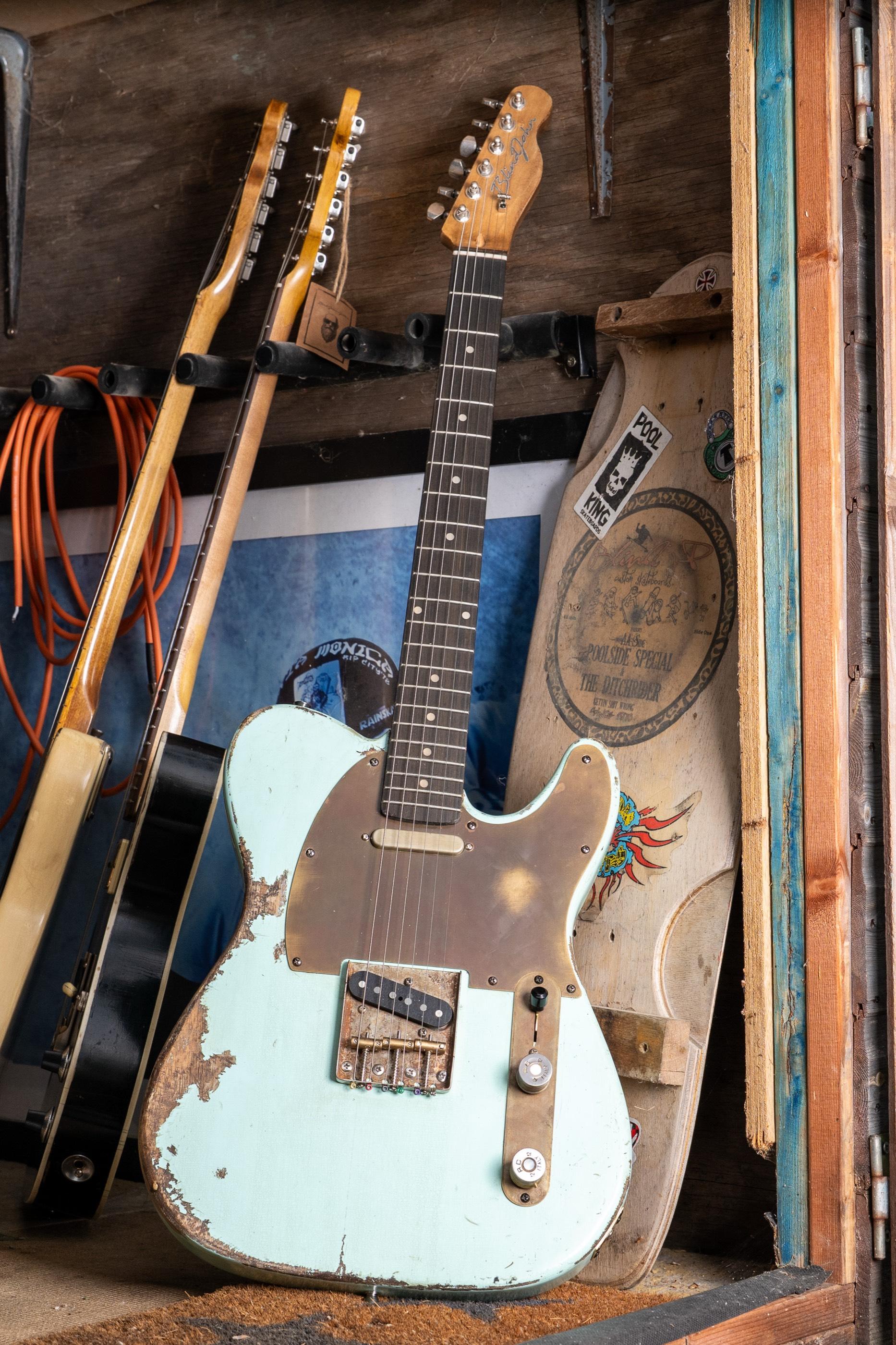
Promo
The Lost Model
The Lost Model promo… Soundtrack by Blind John.
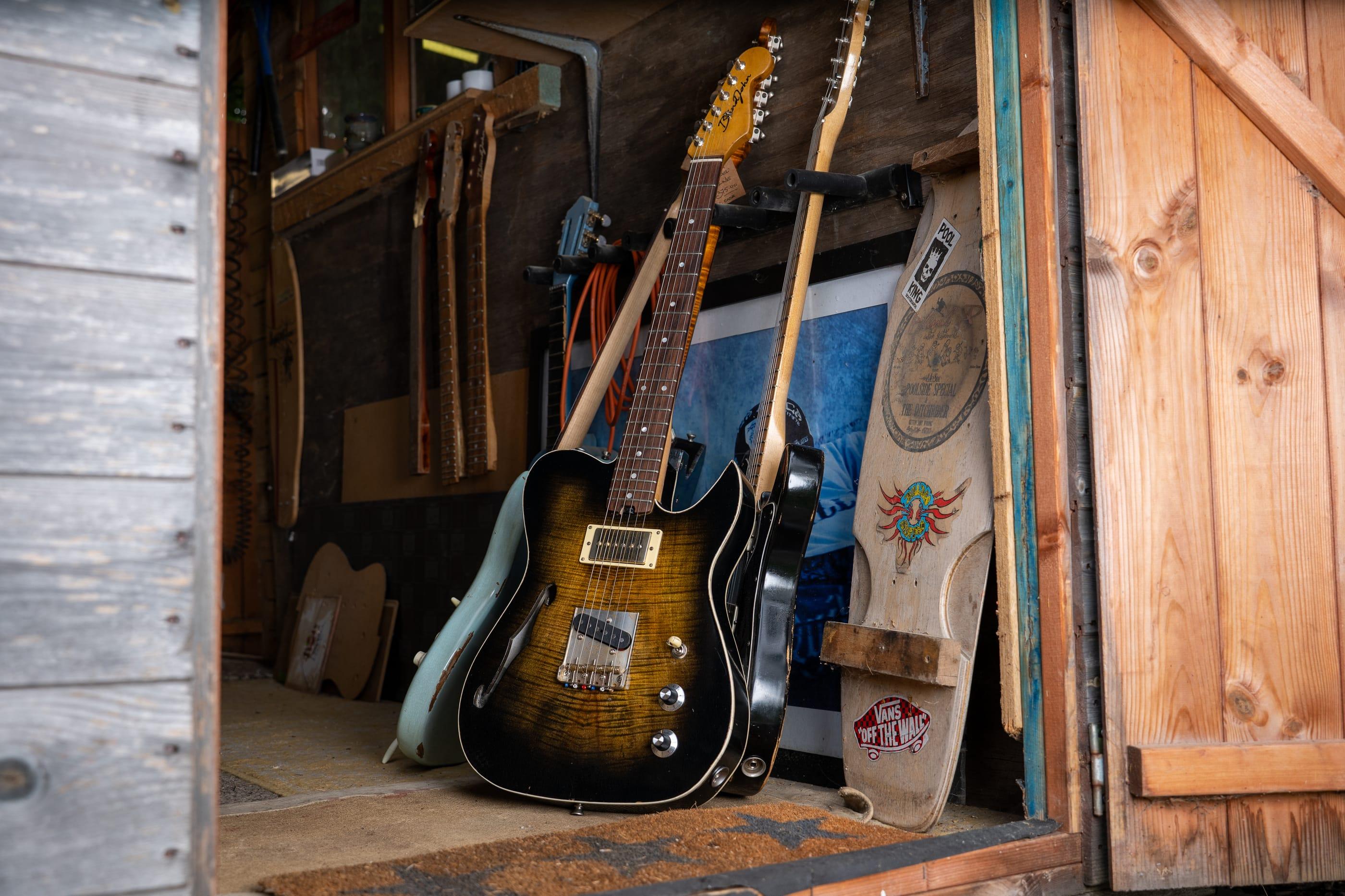
Other than that it's a good old Tele with all its foibles. Just let me know what tickles your fancy.
A Vox AC4TV with a Celestion Greenback, at one watt, clean and dirty. Same mic, same hands. Same chickens outside.
Fine for comparing guitars on most speakers.
The Lost Model promo… Soundtrack by Blind John.
I've always had a thing for the original '68 Thinline — not the twin-humbucker '72, the '68, a traditional Tele configuration. It's not actually semi-hollow, it's chambered: three separate chambers, one out at the side where the sound hole is, one for the electrics, and a funny little hollowed-out block behind the bridge plate. I never understood it. Why three separate chambers? Why not connect them? Surely the acoustics change. Well, they do. So it became an experiment: can I make a hollow-body Telecaster? Then I swapped the curved horn for a much more aggressive point — not an aggressive shape, a point — and once I'd finished that one I decided I'm never making a Thickline the old way again. They're all going to have this point now.
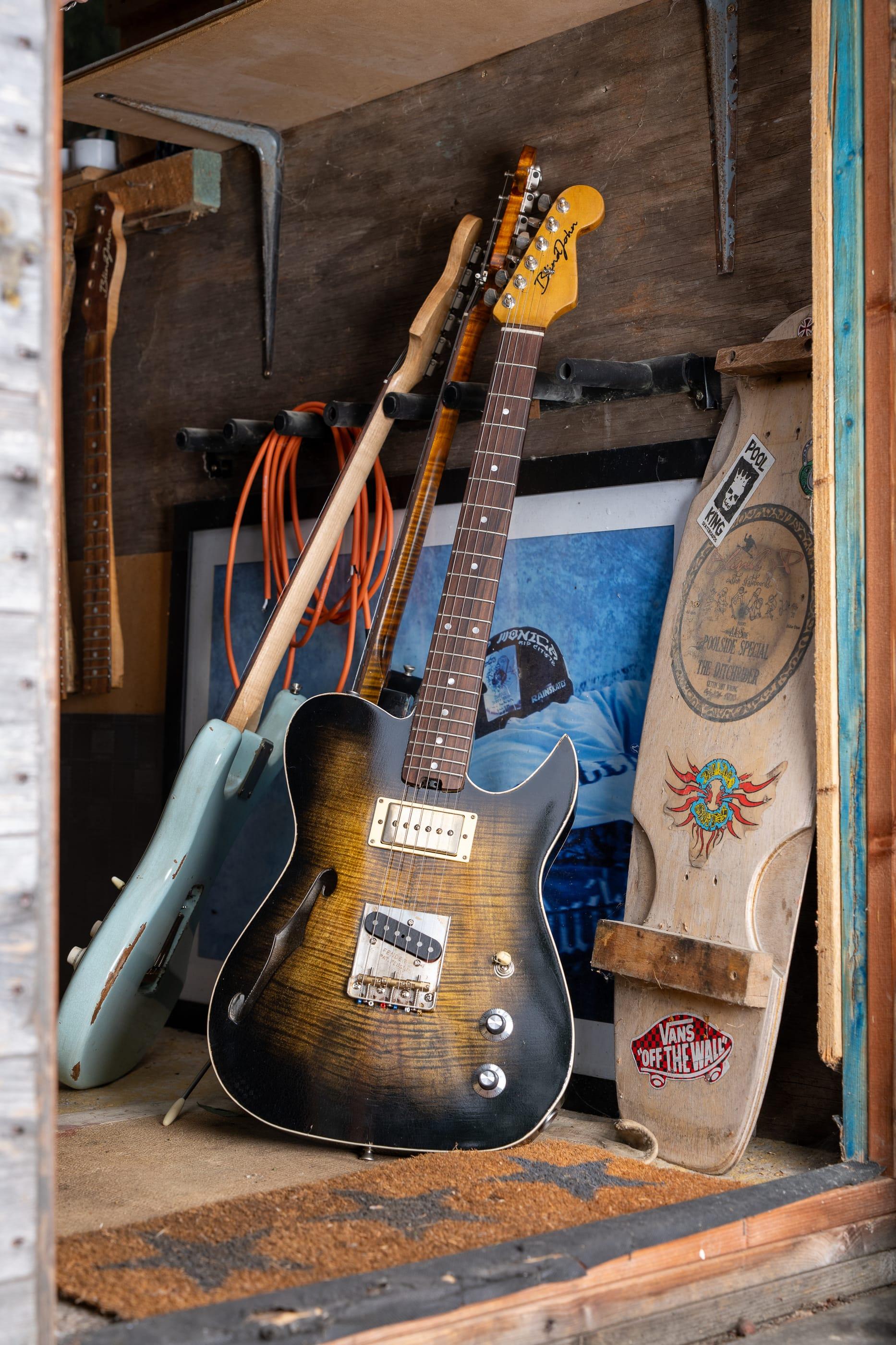
It turns out a hollow Telecaster doesn't work with a Tele bridge — there's too much pressure on the top, so you'd have to make the soundboard so thick it stops vibrating, which takes the point away. You can't use unpotted pickups, because the feedback even at low volume is horrific unless you're eighty feet from your own amp. The neck pocket can't be hollow either. It became a lot more complicated than I envisaged. But with a heel block and a neck block you can keep it pretty much completely hollow.
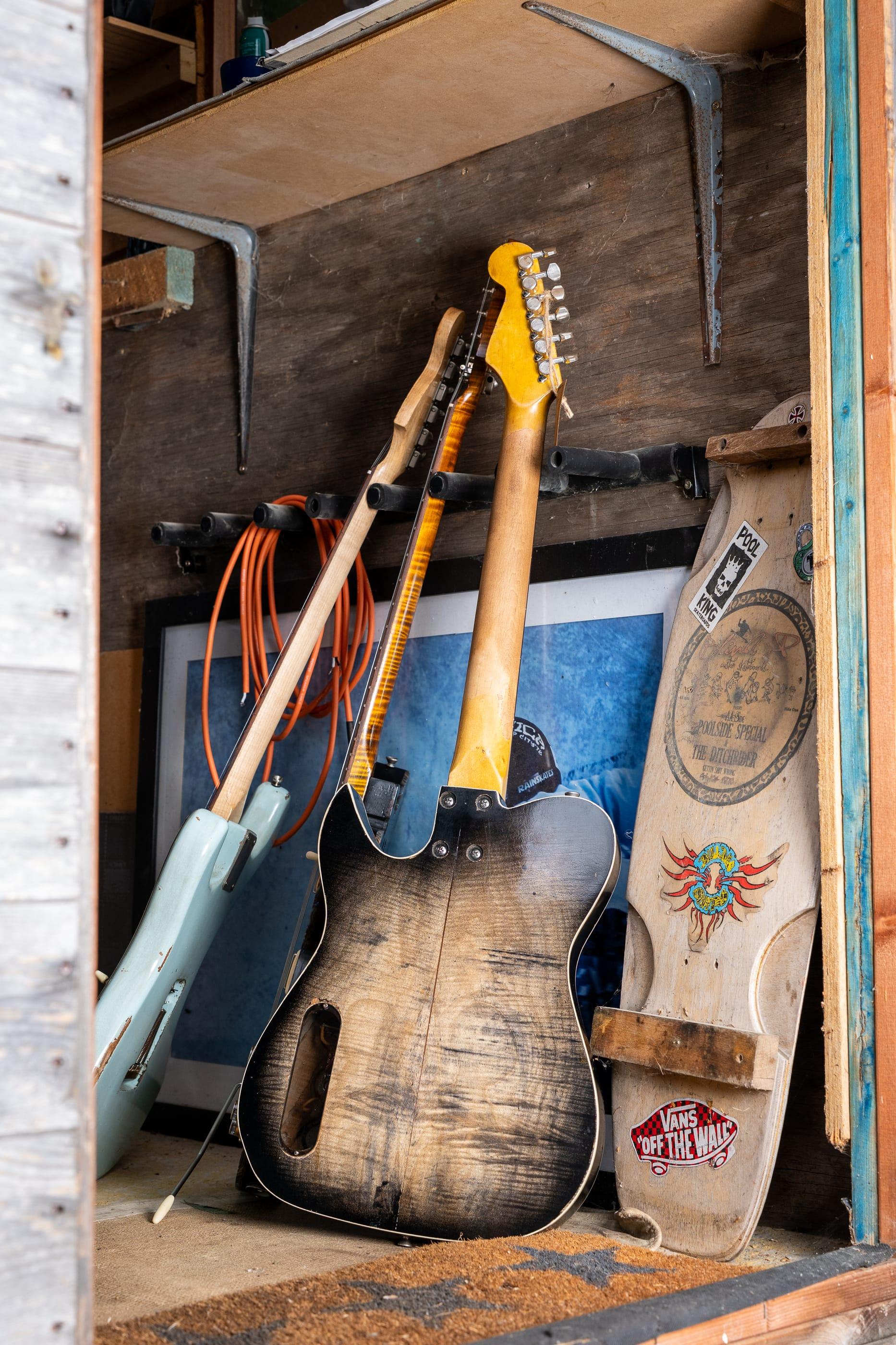
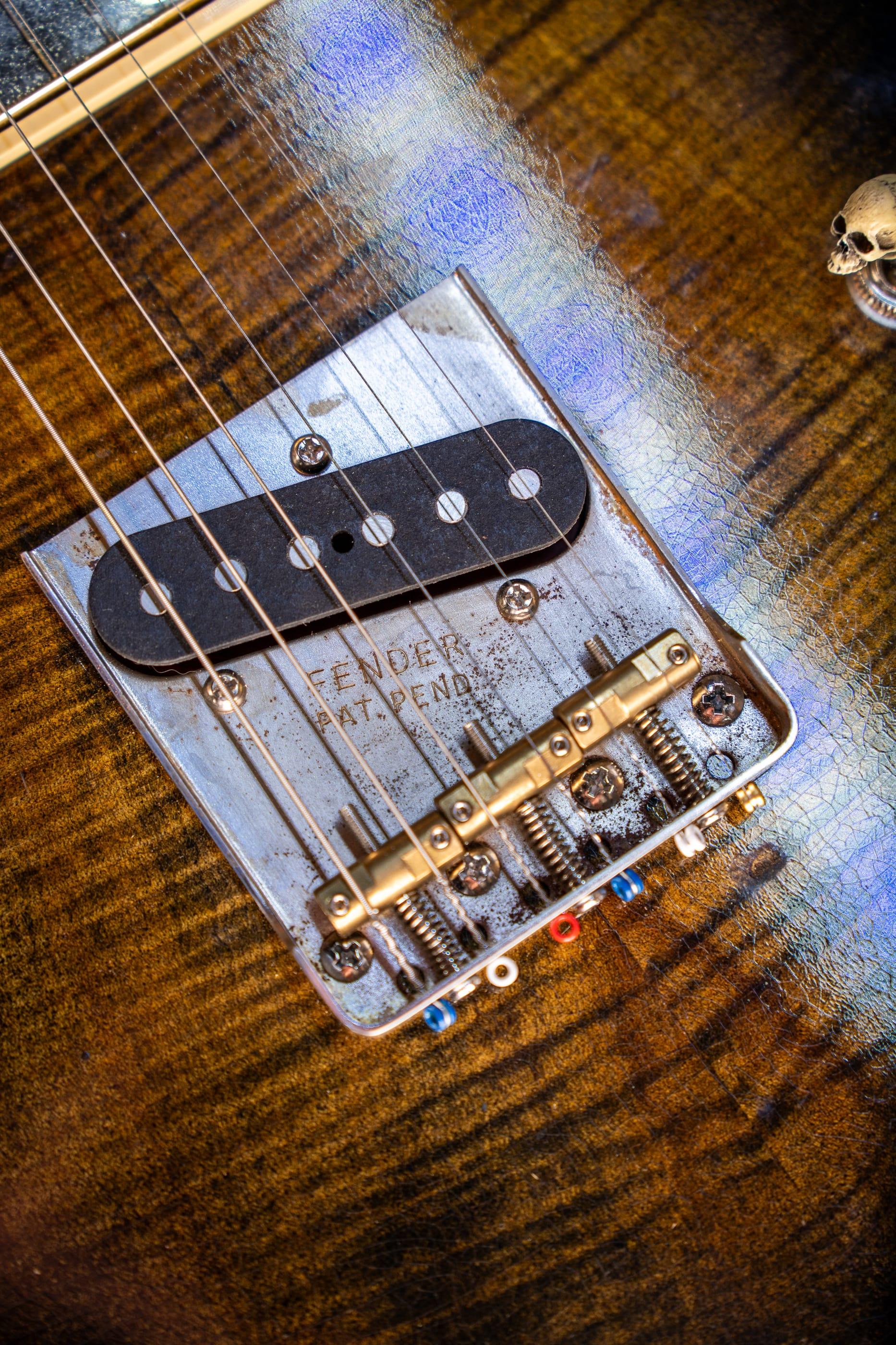
Just let me know what tickles your fancy.
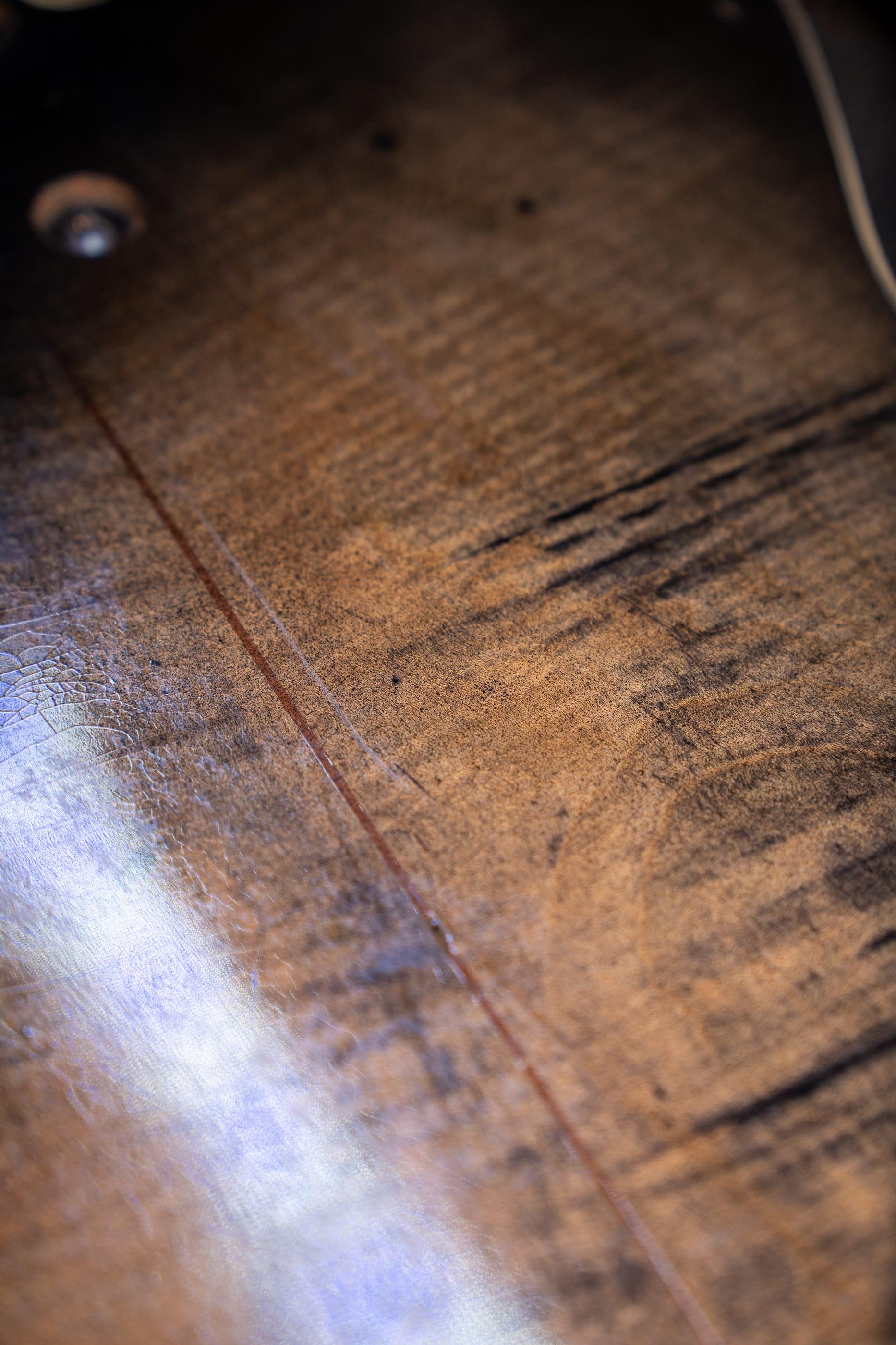
| Body | Hollow, 60 mm deep |
|---|---|
| Board edges | Rolled, if it feels nicer, it plays nicer |
| Back of the neck | Bare wood, waxed, no gloss to stick to |
| Bridge | Cut-down Tele, we love these |
| Inside | A heel block and a neck block, everything else is hollow |
| The voice | Humbucker-size P90 in the neck · Tele set, your call |
| Lead time | 12–16 weeks |
| From | £2,375 |
Deposit £1,188 at order. Balance by invoice when it’s done.
Guitars that started out as a question of sound we just had to build to find out. Each a Tone Control one of one, tuned up, ready to play.
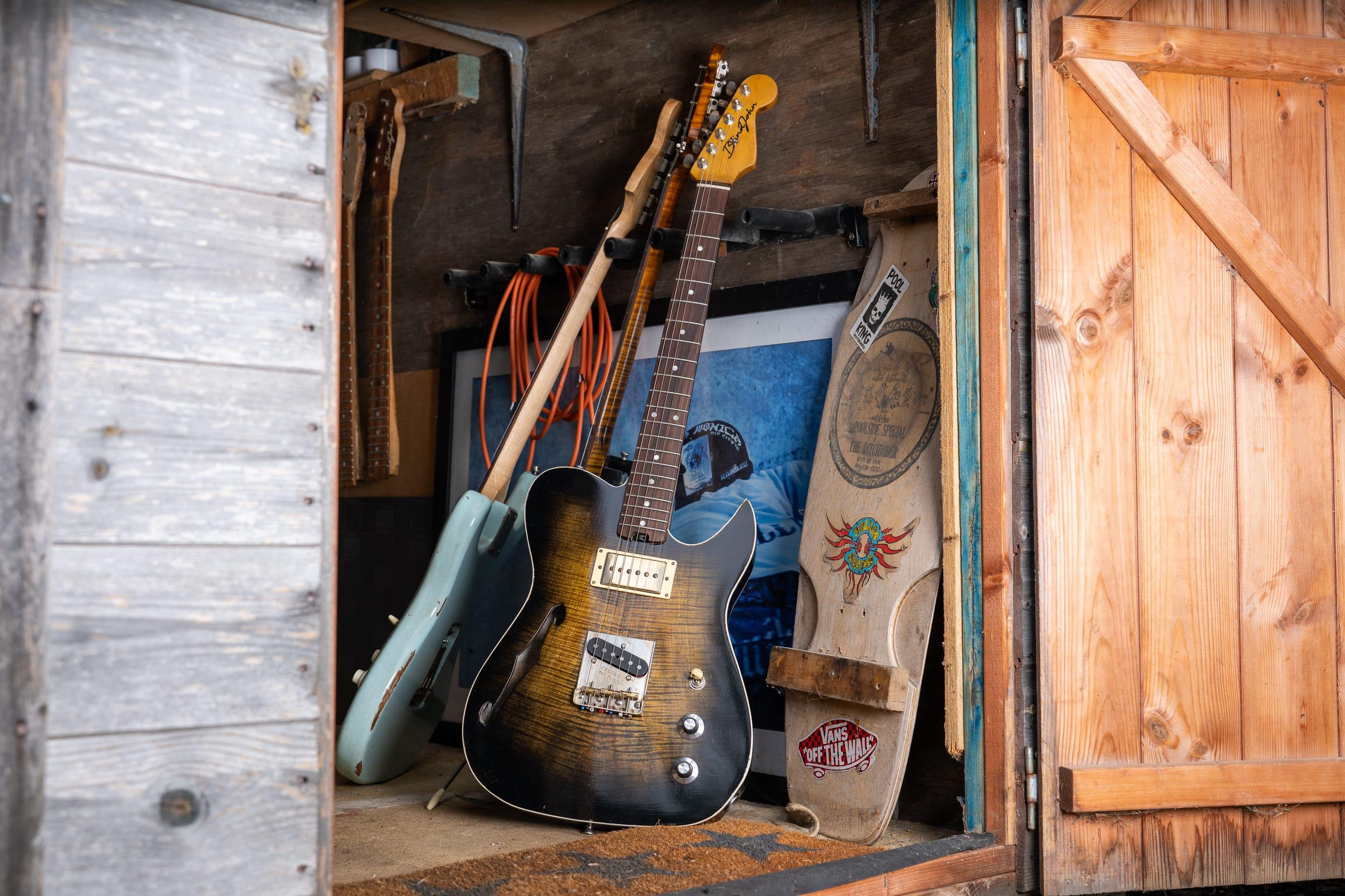
I was sketching from an old thick-bodied Gibson jazz guitar, an ES-175 with a single P90 on it, and I loved the horn. So I swapped the curved horn for a much more aggressive point — not an aggressive shape, a point — thought, that really works, and put it aside. It got folded into a notebook and forgotten. Years later, moving bits from one notebook to the next, a post-it was stuck in the top, and on it was that design. Oh shit, I forgot about that. Fuck it, I'm making that next. So I did, and it took some working out, because a hollow Telecaster doesn't work with a Tele bridge, or with unpotted pickups, or with a hollow neck pocket. A heel block and a neck block solved it. It sounds glorious — a really rich, thick sound, particularly the neck pickup, which looks like a humbucker and is a humbucker-size P90. Once I'd finished it I decided the old Thickline was done. They're all going to have this point now.
It came from thinking about the Thickline: I wondered what a solid-body Thickline would be. Korina — black limba, whatever you want to call it. It's thicker than a stock Tele by about ten mil and fractionally bigger all round, with a two-mil solid brass pickguard and control plate. Add all that together and it's heavier than a '50s Les Paul. It looks great and it plays, but it is a heavy guitar, and even sat down you notice it. I'm not a hundred per cent happy with it — I'm never a hundred per cent happy with any guitar, you have to learn to let go — but I may have let go of this one too early. It's called the Runaway because you ain't running far with it. I may yet turn it into a smuggler: hollowed out under the pickguard, the way a customs man once found a '60s Tele was, and the way we use now to lose weight.