What a custom Telecaster can be
The OG, why it's lasted, what people ask for, the neck, the weight, the pickups, the details, and the relic'd ones, from out of the case for the fourth time to hell and back.
The OG. It is literally the OG.
A Telecaster is the OG where electric guitars are concerned. It is literally the OG. From Leo's very first Broadcaster, and a legal dispute with Gretsch, who had a drum set called the Broadkaster, so Leo changed it. Between the Broadcaster and the Telecaster, early fifties, I forget the dates, there was no name on it. It said Fender on the headstock and nothing else. Those ones are called Nocasters. The Telecaster came shortly afterwards, obviously for the TV, television being new and avant-garde. I think more electric guitars in that shape have been sold than any other. I don't know that for definite, but I would quite happily put a bet on it.
It's the most basic, utilitarian design, which is exactly what Leo was aiming for. It's a slab body, a slab neck and a slab fretboard bolted together in a flat geometry. It is as basic as it gets.
Why it's lasted. There's nothing you can't do with a Telecaster.
It is visually appealing and it is basic. It's easy to mod, it's easy to change, which people have been doing for donkey's years. It's not a massively complicated build. Getting a neck right is getting a neck right, but there's no odd neck geometry. It's just really basic, in all honesty, and I think because of that it just works. If you look across musical genres there's nothing that hasn't been done on a Telecaster, and there's nothing you can't do with one.
It's still my go-to guitar. Not counting the guitars I make, my own guitar is a Telecaster, and I've probably owned eight or nine over my lifetime. I've done more Teles than any other guitar, and I'll probably go on doing more Teles than any other guitar.
What a Telecaster can be. From one pickup to twin humbuckers.
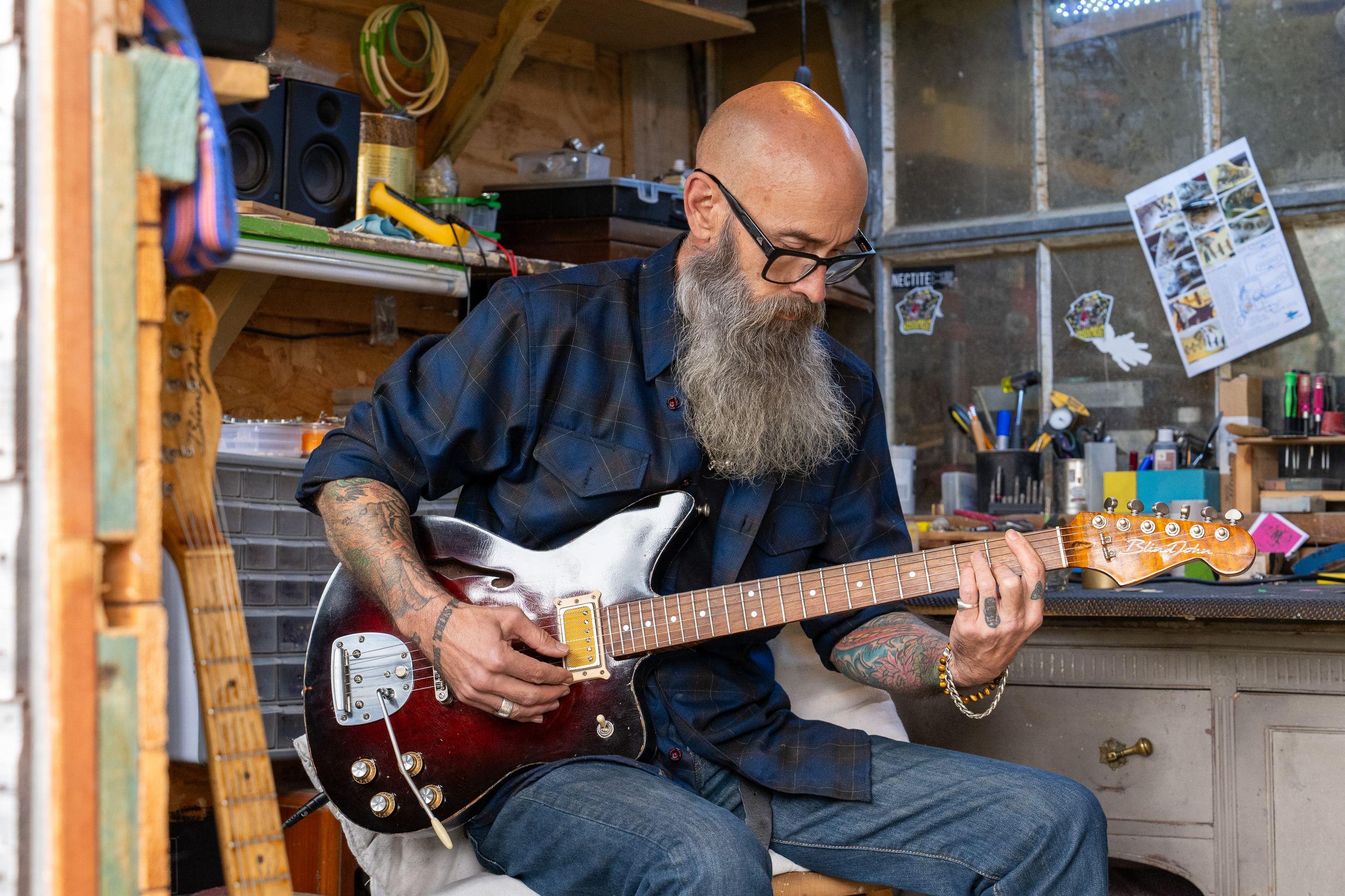
If somebody comes to me for a Telecaster I don't necessarily guide them towards the Gent, which is my take on the Esquire, the original single-pickup Telecaster. The Telecaster is such a versatile guitar, and over its lifetime it has come in so many shapes, styles and flavours that you can pretty much do whatever you want. From the most basic, the original single bridge pickup, volume, tone and a three-way switch that gives you a darker tone and a straight-through to the socket bypassing the tone capacitor, a sort of bright switch if you want. Through twin humbuckers, through semi-hollow Thinlines, through to my own take on the Thinline, the Thickline, which is basically a deeper-bodied hollow Telecaster.
Even if you separate mine away from the traditional Telecasters, because it has a non-traditional shape, it's deeper, it has a pointed horn, its origins are very much in a Telecaster. There's no ifs or buts about that. And even that design I can chop and change: a single pickup, a P90 in the bridge, twin humbuckers. I had an enquiry a while back, which didn't pan out, for a Thickline with Filter'Trons in. They're a pickup Gretsch pioneered, if memory serves, and they're still on a lot of Gretsch's high-end guitars, although other pickup makers do make them. It's a different way of laying out and wrapping the poles and the bobbins, which gives the guitar a different tone. Think of that classic Brian Setzer sound from the Stray Cats. He uses TV Jones, I think, but they're still Filter'Trons in that big fat Gretsch.
What people ask for. A really traditional late fifties butterscotch blonde.
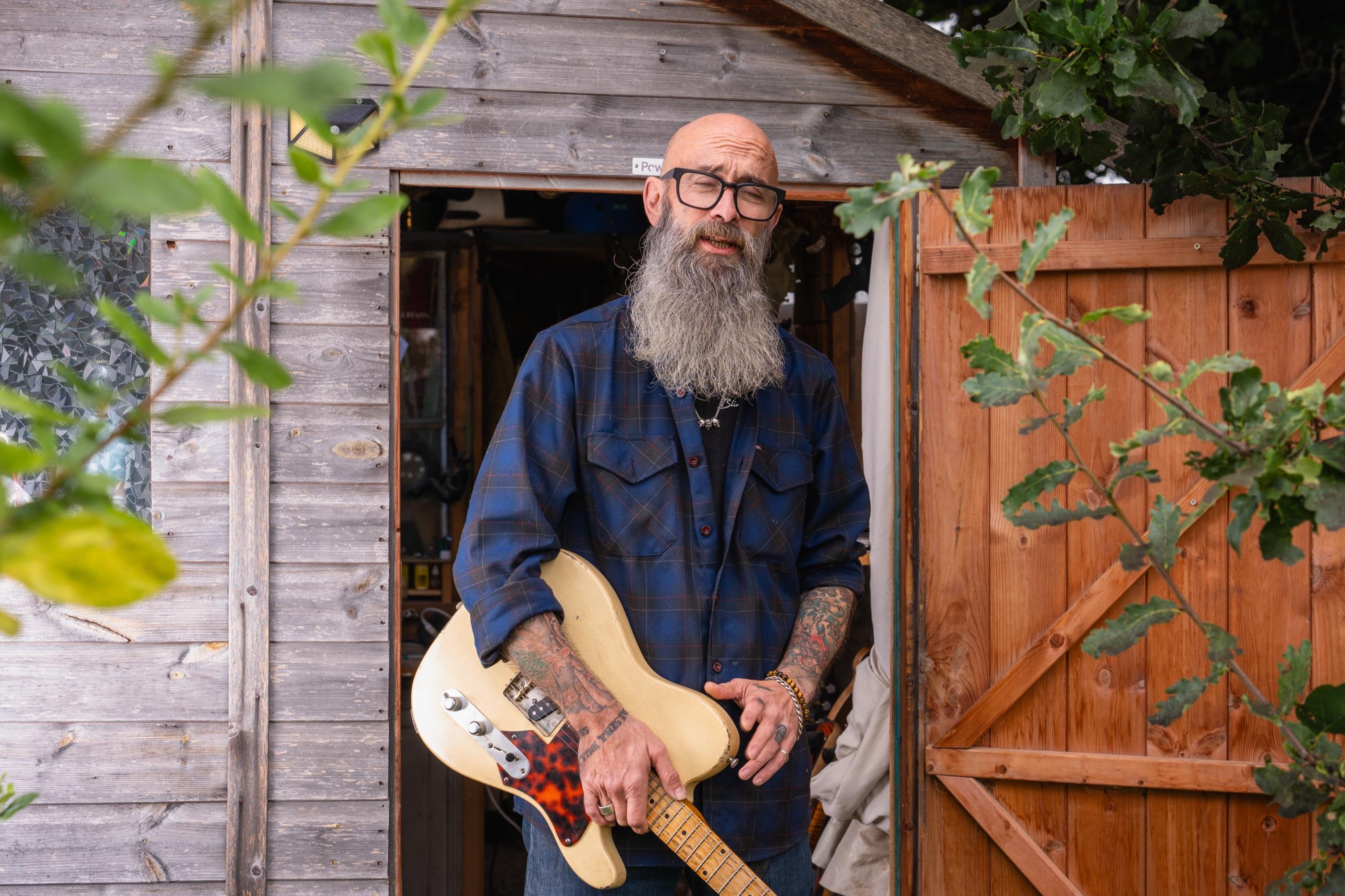
What style of playing, what are you going to do with it, all those questions I ask routinely regardless. But the funny thing with a Tele is that when people come for one they don't tend to have a massively specific idea in mind, but they tend to be a little more specific than people coming for other shapes. And the most common one is: I want a really traditional late fifties butterscotch blonde. Blackguard or whiteguard, usually a blackguard. I've probably made more blackguard Teles than any other Tele, with a really traditional spec, and they're incredible. They are stunning. Not just mine, I love mine, but that particular guitar.
I've played two pre-1960 guitars in my life, and one of them was a '58 Telecaster. It belonged to a music producer who lived next door, years ago. I'm going back thirty-odd years, more maybe. It was worth a fortune then. Now, God knows what it would be worth. It's a terrifying thought. But there was something it had. I was about eighteen, nineteen, so I knew nothing about vintage instruments, and I picked that up and there was something very, very special about it. It wasn't that lovely fondness for hindsight we get as we get older. I was essentially a kid still, so I didn't know. I hadn't immersed myself in the guitar history that I have done across the years. The music, yes, but not the guitar history. I had no idea what a '58 Telecaster was. No idea. It was its resonance when it wasn't plugged in. How it sounded. I can't even remember what amp I was playing through. Probably a solid state, in all fairness.
I'm not sure easy to play is part of it, either. I've played some incredible guitars that sound incredible but aren't particularly easy. They make you work.
The neck. What have you played that you really liked?
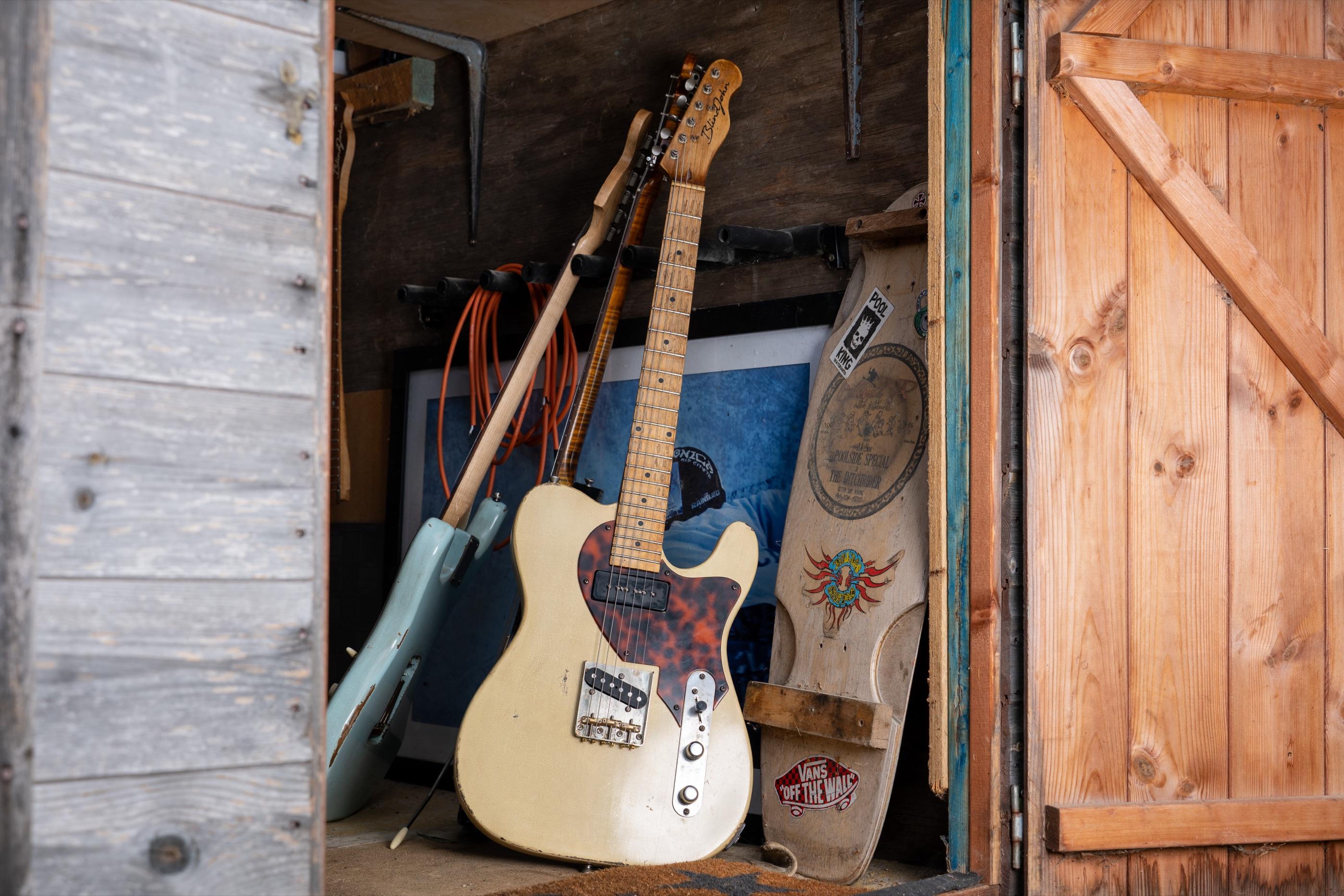
If I ask what sort of neck profile you're looking for and they go, I don't know, the first obvious question is: well, what do you play? And then: what have you played that you really liked? If they give me that, it's easy enough to look up the specs of the neck. We're also in a wonderful place these days, where there's enough history and enough guitars that people have standardised neck profiles, to a point. Deep Cs, shallow Cs, Ds, old-school baseball bat. There aren't many, and because there aren't many people tend to stick to them. It becomes easier.
I've almost always got a couple of guitars here anyway, and I try to have a couple with different profiles. My acoustic's got a particular profile, my Telecaster that's always here has a particular profile, so it's relatively easy to go: well, does that feel good? It's usually fairly quick.
There's always been this thing: you've got small hands, get a thinner neck, a narrower neck. I happened to see part of an interview with Cindy at Carmine Street Guitars in New York, who makes some lovely guitars. Their timber stock is all classic buildings, the floors and the joists, so they have timber from the most incredible, history-rich place. But I digress. She was talking about making much wider necks, and that she'd been doing a lot of work with physios who were saying it's actually better for your hands, because you're not trying to pinch things. It was on Instagram, I was doom-scrolling, and it caught me. And then obviously you can't go back and find it. But it's something I want to look into.
The weight. The Superlight.
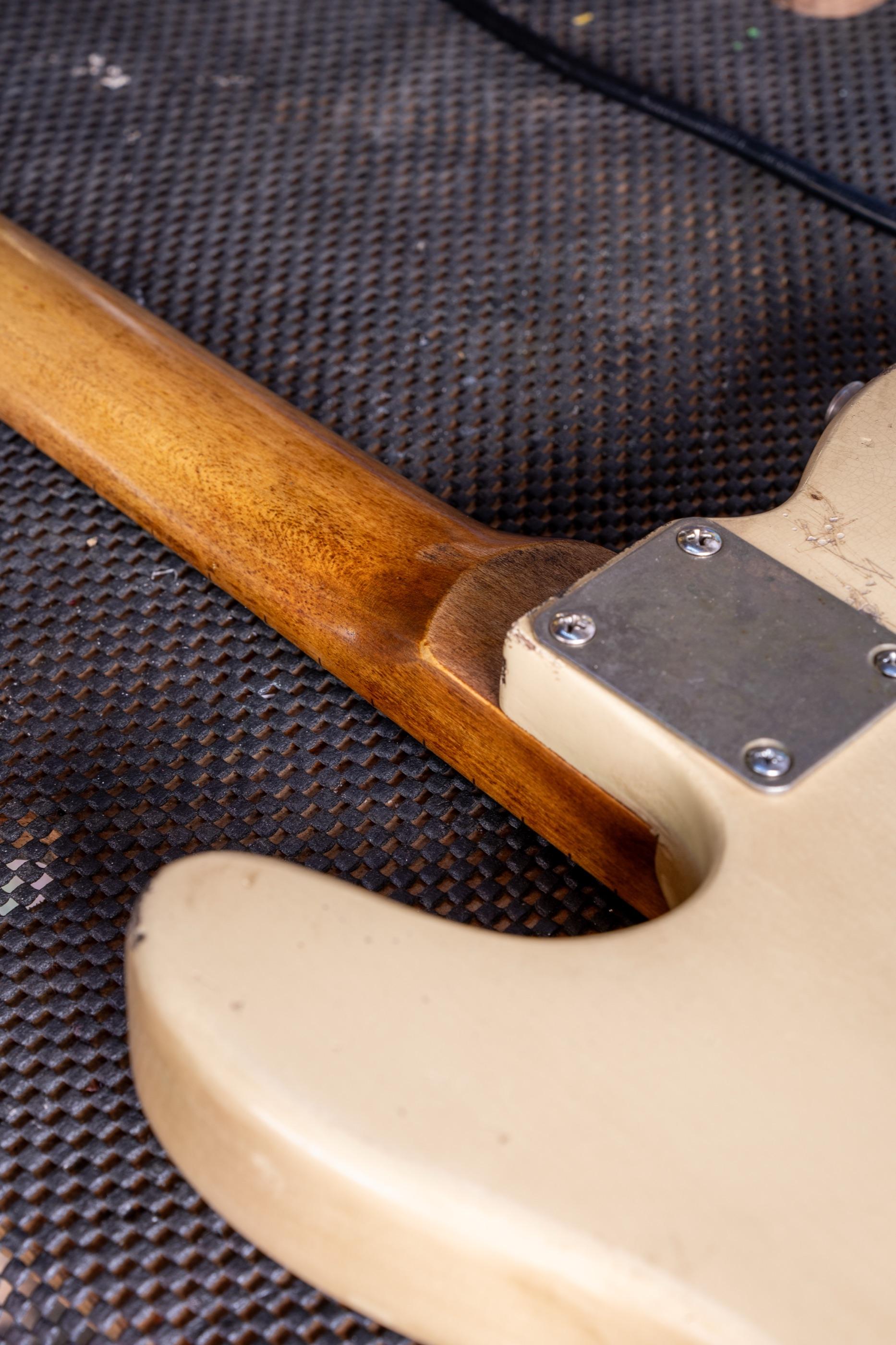
Full-on bespoke. Somebody asked me recently for a Superlight. I've made two. Pretty much a stock Tele, but it's called the Superlight because I happened to have a piece of southern yellow pine kicking around the workshop for years that was almost stupidly light but really resonant. The original Teles were made of pine before Leo switched to alder, and it's not a timber that's rare to the guitar industry. People still use southern yellow pine. It's a lot denser than the pine we think of from MFI tables in the eighties. But this was just ludicrously light. You picked it up and it felt balsa-wood light. Although balsa is a hardwood, it's not about density, it's about speed of growth. This was stupidly light, and I had enough for two bodies. A guy who plays in a jazz-blues band in London has one and Andrea from Soul String has the other.
They were stupidly, stupidly light, probably about a kilo lighter than a Thinline, if not more, but ridiculously resonant. The volume that would come off them played unplugged. Happy accidents occur, and that particular bit of pine has been a favourite of mine, because it had been kicking around my workshop for years. I would love to make more, but I've yet to find any timber that light. I was asked for one last year and said yes, I'm happy to do one, but I haven't been able to find any timber that light since that I'm happy using. I can get basswood from China that's ludicrously light, but it's about the same density as balsa with little resonance. I wouldn't satisfy the quality requirements for myself, let alone a client.
Pickups. If I can buy British, I will.
Pickups are always a big one, because you have so many options, from the cheap end to the boutique end. I tend to use the higher-end boutique stuff, simply because to me it sounds better. And like anything else, if I can buy British while building a guitar, I will. There's a very healthy market for hand-wound pickups in the UK at present. My higher-end stuff tends to have Monty's in there. Sean at Old Bones makes incredible pickups, and he's local. I've used him in a couple of guitars. There's Bare Knuckle in Cornwall. And Mark at OX4 makes great pickups. They're the ones I've used more recently.
The details. Arm relief, belly carve, yes or no?
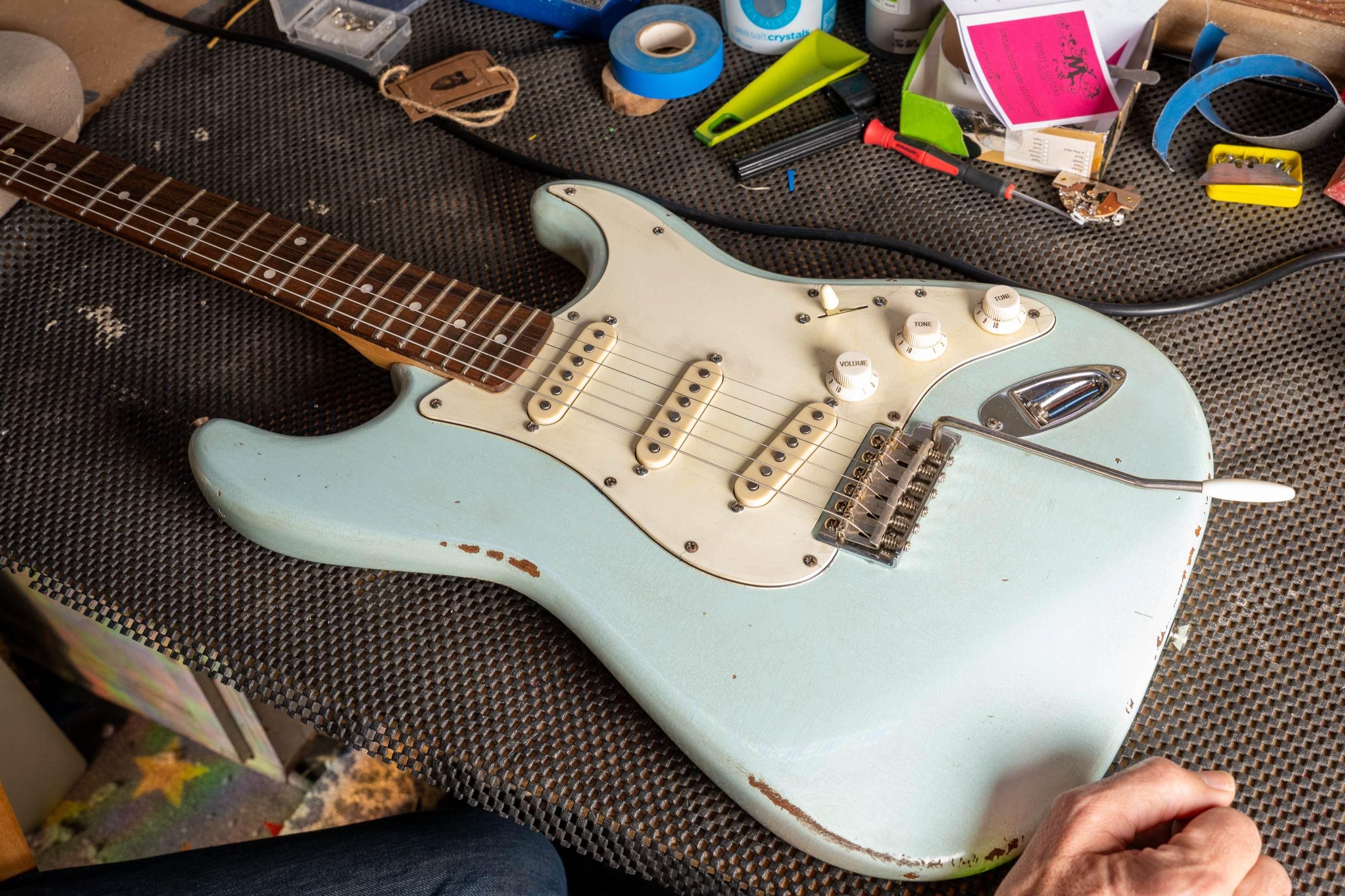
From pickups it tends to go straight to: arm relief, belly carve, yes or no? Some people love them on a Telecaster, others don't. For me, I love them both. I think it depends on what style of Telecaster you're after. If it's no cuts, do you want it bound or unbound? Then tuners. On a Telecaster people tend to go for the old-school Kluson type. I won't say basic, because they're not basic. Era-correct. I've just looked at the Strat over there, which has those on, and the three Telecasters upstairs have them on. I don't usually get asked for custom tuners. I used Sperzels on the Magpie I sold earlier in the year. They match the guitar, the pearl buttons match the pearl pickguard, and it looks nice, but the client just doesn't like locking tuners. Thinks it ruins the look. I'm inclined to agree, but it did work on that particular guitar. He came back to me because he wanted the neck reshaped, from a deep C to a shallow, and when I did that I changed the tuners for him.
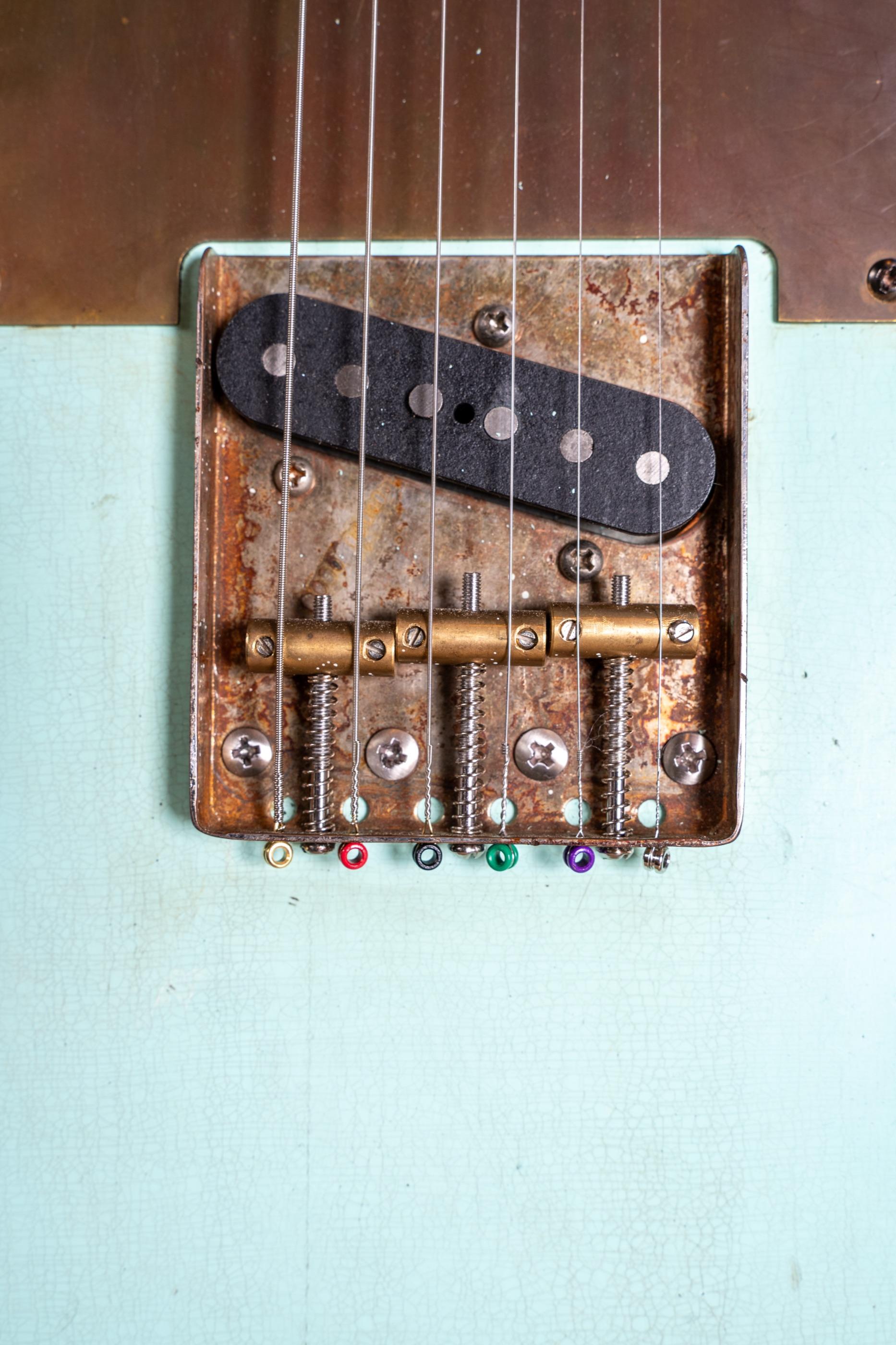
Custom pickguards are a different matter. People have had some weird and wonderful ideas about pickguards. I make my own now.
The relic. Out of the case for the fourth time, or hell and back.
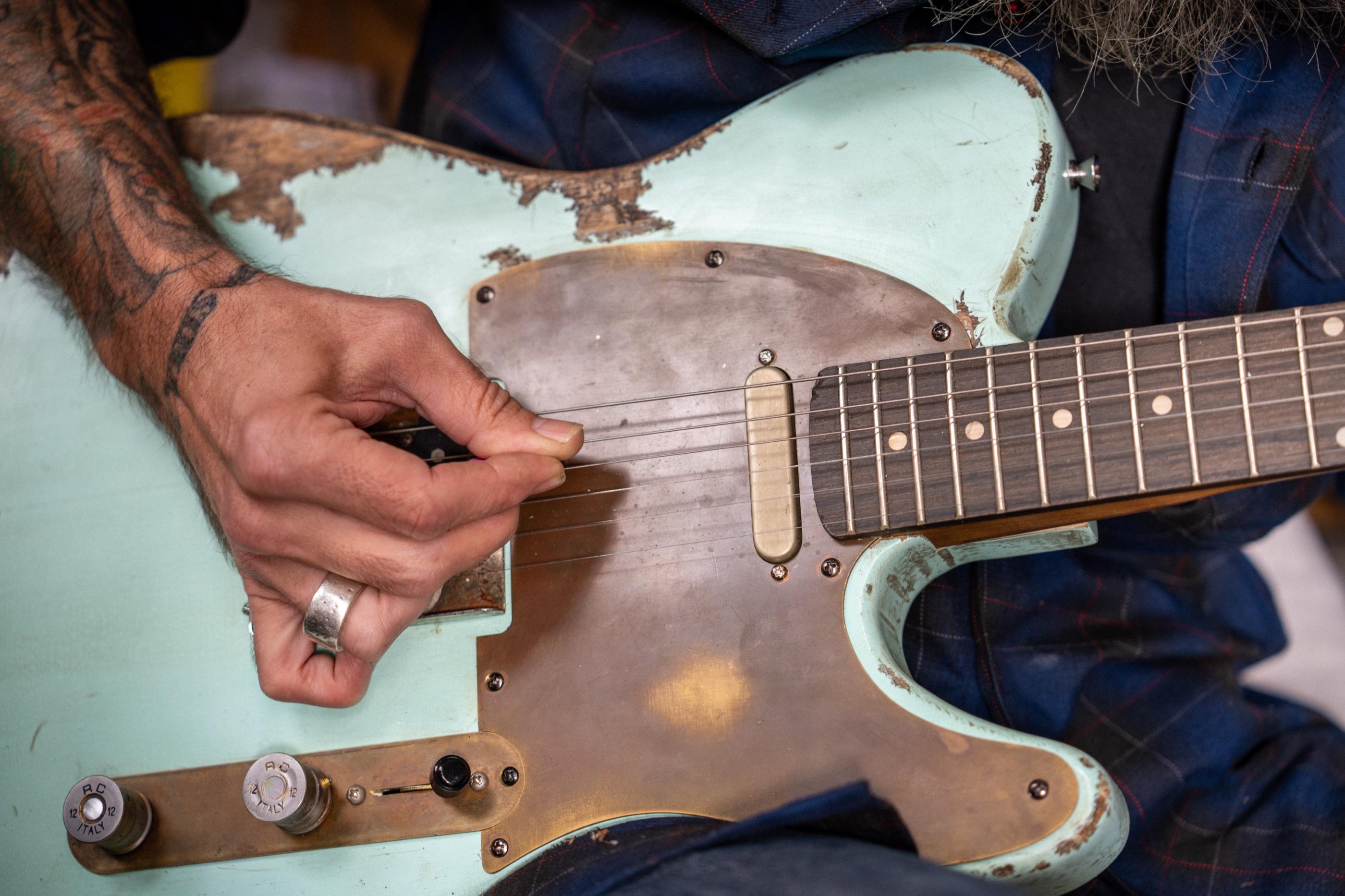
Colour tends to be what they ask for first, weirdly. And then the wear could be anything, literally. I've done Teles that look like they've just been taken out of the case for the fourth time since they were built in 1960, and I've built Teles that look like an eighties Tele that has literally been to hell and back, and everything in between. But the most common I'm asked for is late fifties butterscotch blonde.
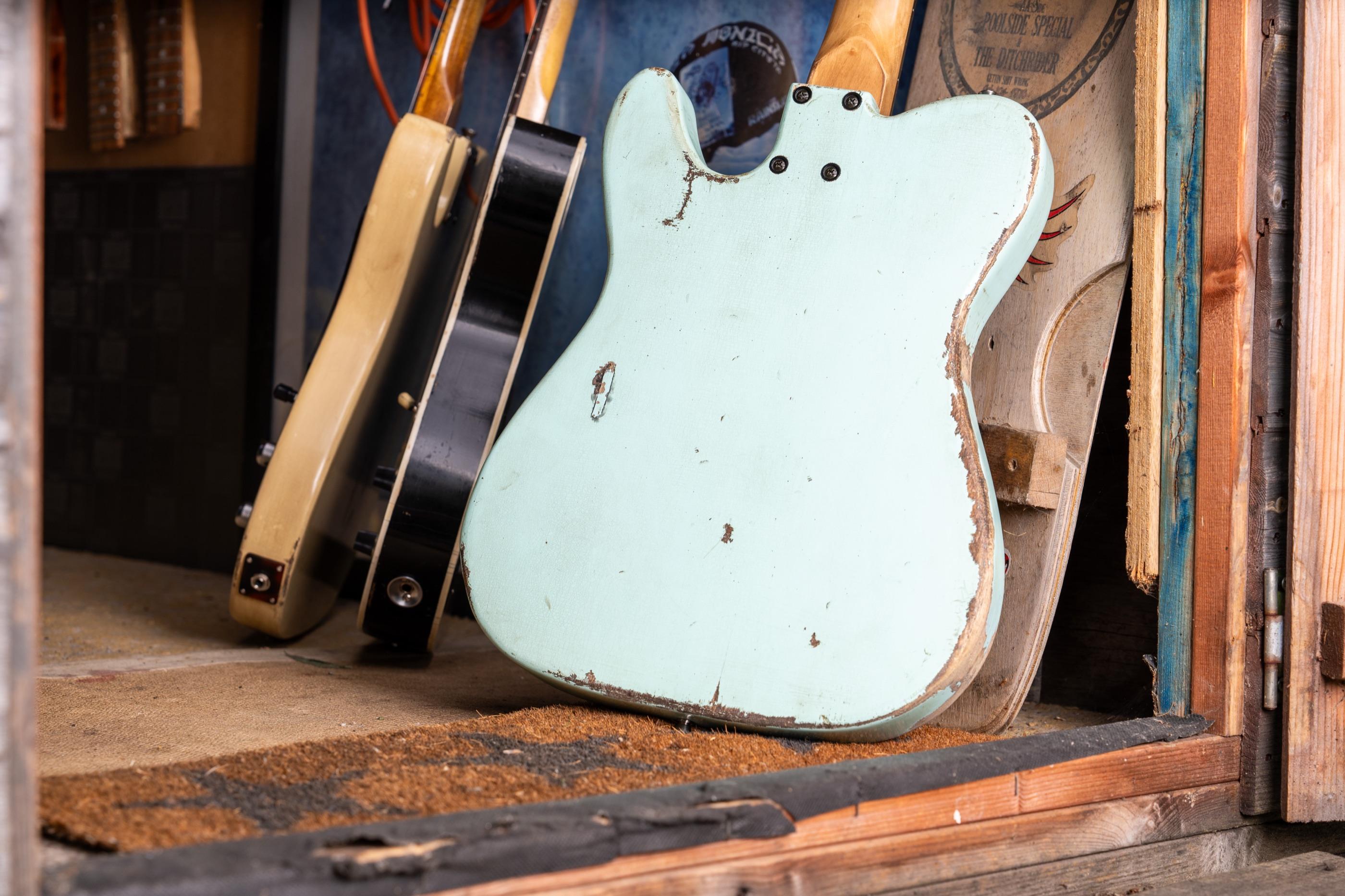
More recently I was asked for one in swamp ash. But can you make it look like pine? That was a fun one. Swamp ash has a bit more low end than alder, and alder tends to be a little brighter, and they were adamant they wanted swamp ash. Not a problem, you want swamp ash. But can you make it look like pine where it's worn through, on the arm relief, under the pickguard, across the edge? I don't know. I'm certainly going to try. Without sounding like I'm blowing smoke up my own ass, I absolutely nailed it, every picture, and it was a great learning curve, because now I know there's a particular technique that makes swamp ash look like pine. Where the nitro goes translucent with wear you get the dirt in the grain, and there's a similarity in grain between pine and swamp ash. Swamp ash is obviously darker, but when pine gets dirty there's a similarity. Every comment I've had was: oh, it's in pine too. No, it's not.
| Recorded | 19 October 2026 |
|---|---|
| How | A cup of tea and a microphone, cut, not written |
| Who | John |